Setting Up an Efficient Packing Station with Bubble Wrap
Lay out a packing station that keeps bubble wrap, boxes and tape within reach, so your team packs faster, wastes less and ships consistently.
By Bubble-Wrap.my Team
Key facts
- A good packing station keeps bubble wrap, boxes, tape and labels within arm's reach.
- Mount rolls on a holder or rod so wrap pulls off smoothly and stays clean.
- Narrow rolls (0.2 m to 0.5 m) suit small items; 1 m rolls suit large items.
- Every roll is 100 m long, which makes usage easy to track by roll count.
- Keep separate, labelled spots for single layer, double layer and black bubble wrap.
- Clear packing rules help every staff member pack the same way.
Whether you pack a handful of orders a day or run a busy e-commerce warehouse, the layout of your packing area has a big effect on speed, waste and parcel quality. A messy table means staff hunt for tape, cut bubble wrap unevenly and make more mistakes.
This guide shows how to set up an efficient packing station built around bubble wrap, so every order is wrapped properly and your team can work smoothly from the first parcel of the day to the last.
Start with the workflow
Before moving any furniture, think about the path each order takes. A simple packing flow usually looks like this:
- Pick the item and bring it to the station.
- Check the item and the order details.
- Wrap the item in bubble wrap.
- Place it in a box, mailer box or courier bag, adding void fill if needed.
- Seal, label with the air waybill and move it to the outgoing area.
Arrange your station so the order moves in one direction along this path, usually left to right or front to back. Items should not have to travel backwards or cross over finished parcels.
Choose the right table and space
The packing table is the heart of the station. It should be sturdy, flat and large enough to lay out your biggest regular item with room to spare for wrapping.
- Working height. Staff should be able to wrap and tape without bending over. Adjust the table or use a platform if needed.
- Clear surface. Keep the main wrapping area empty. Supplies belong on shelves, hooks or holders around it.
- Clean edges. Rough edges or staples on the table can puncture bubble wrap and damage products.
- Good lighting. Staff need to see scratches, defects and label details clearly.
Mount your bubble wrap rolls properly
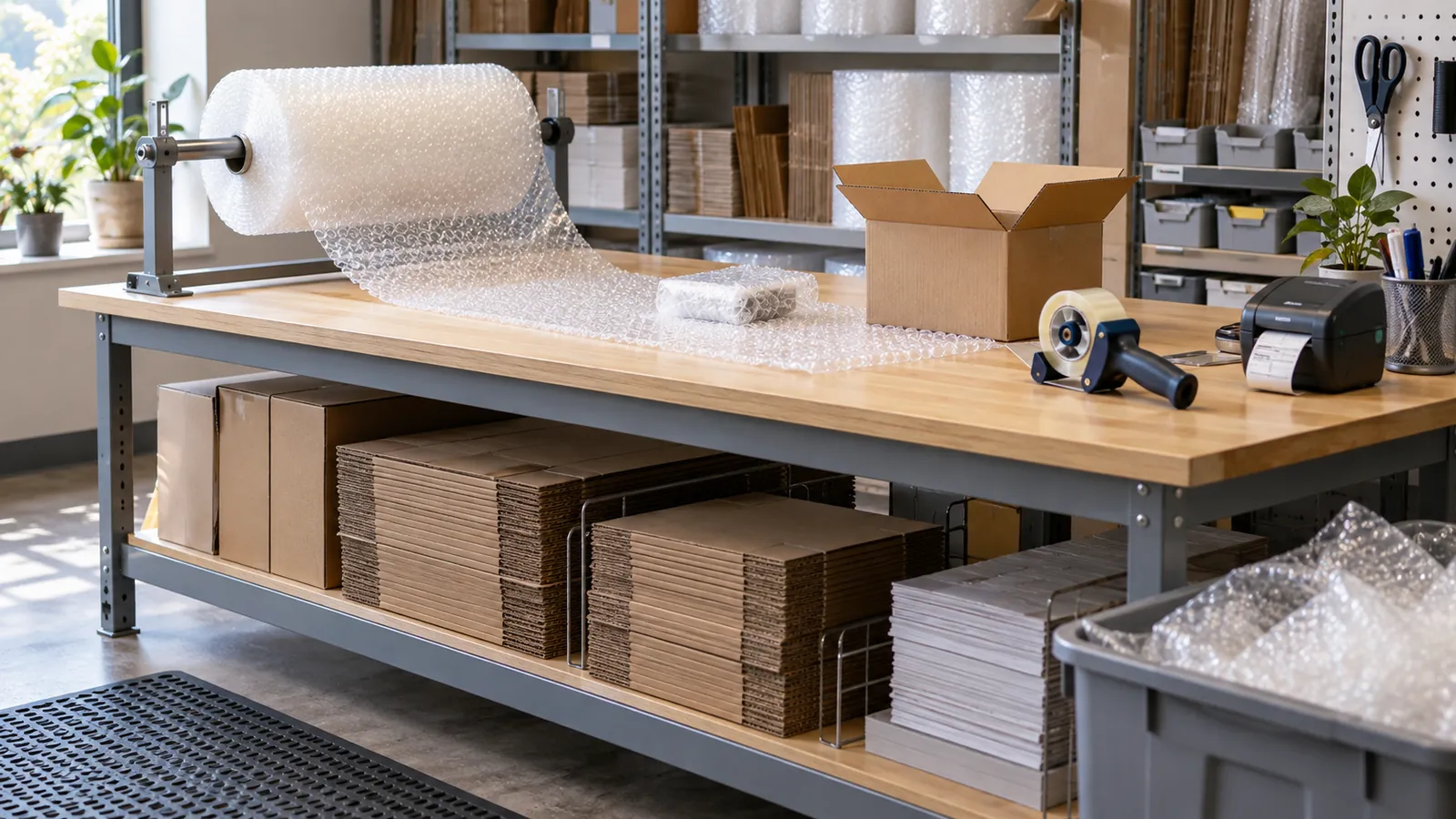
Bubble wrap left lying on the floor gets dusty, stepped on and crushed. Mounting rolls on a holder or a simple rod at the end of the table lets staff pull off the length they need with one hand and cut it cleanly with the other.
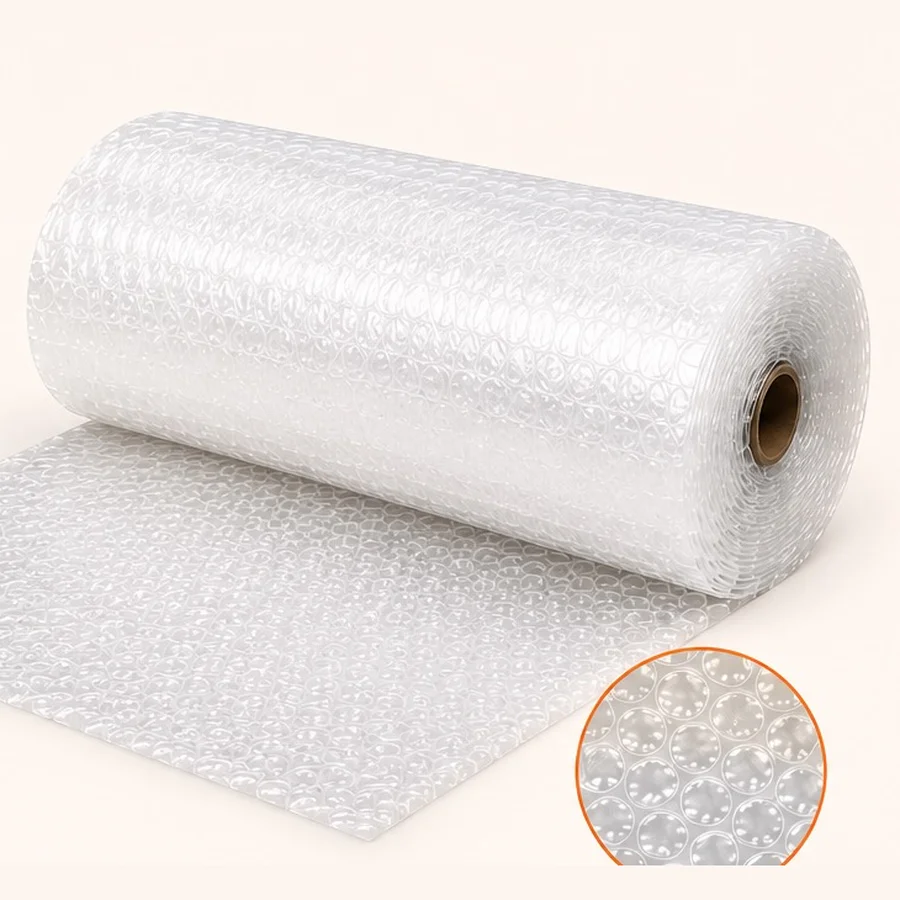
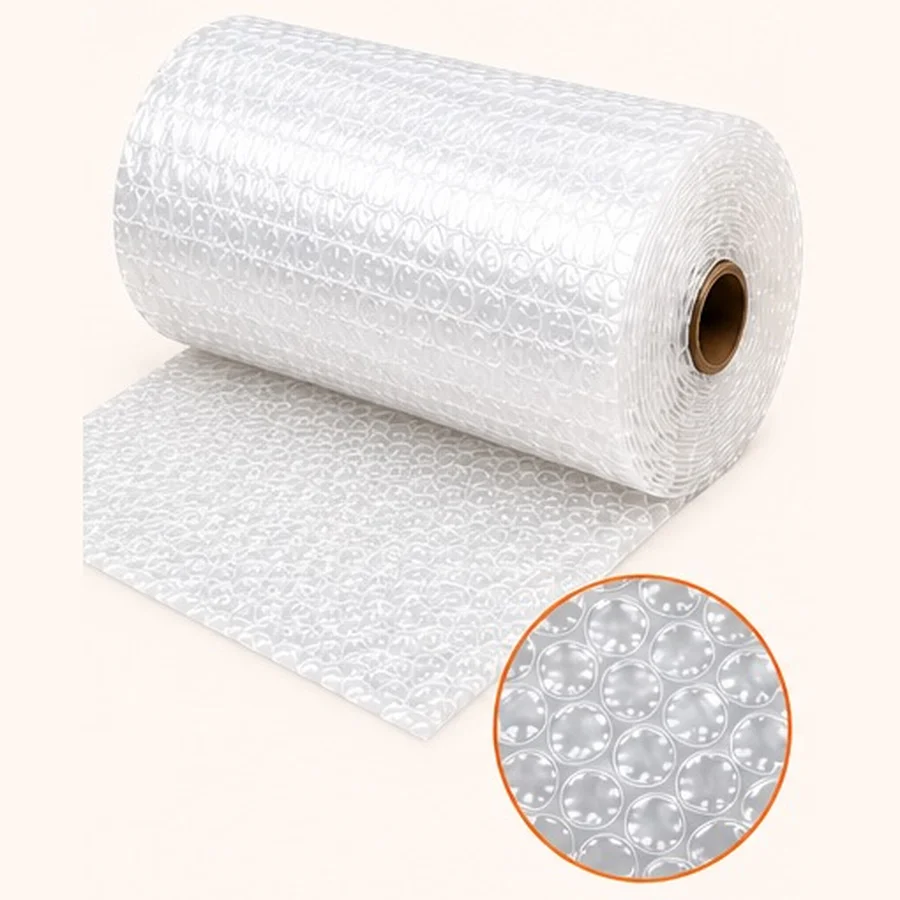
Think about which widths each station needs. Our transparent single layer rolls come in 0.2 m, 0.25 m, 0.33 m, 0.5 m and 1 m widths, and transparent double layer rolls in 0.25 m, 0.33 m, 0.5 m and 1 m widths. All rolls are 100 m long.
| Station type | Suggested setup |
|---|---|
| Small items (accessories, cosmetics, gadgets) | A narrow roll mounted close to the packer, such as 0.2 m, 0.25 m or 0.33 m |
| Mixed items | One narrow roll plus a 0.5 m roll |
| Large items (furniture parts, frames, machine parts) | A 1 m roll on a floor stand or wall rod |
| Fragile or higher-value goods | A transparent double layer roll alongside your usual single layer roll |
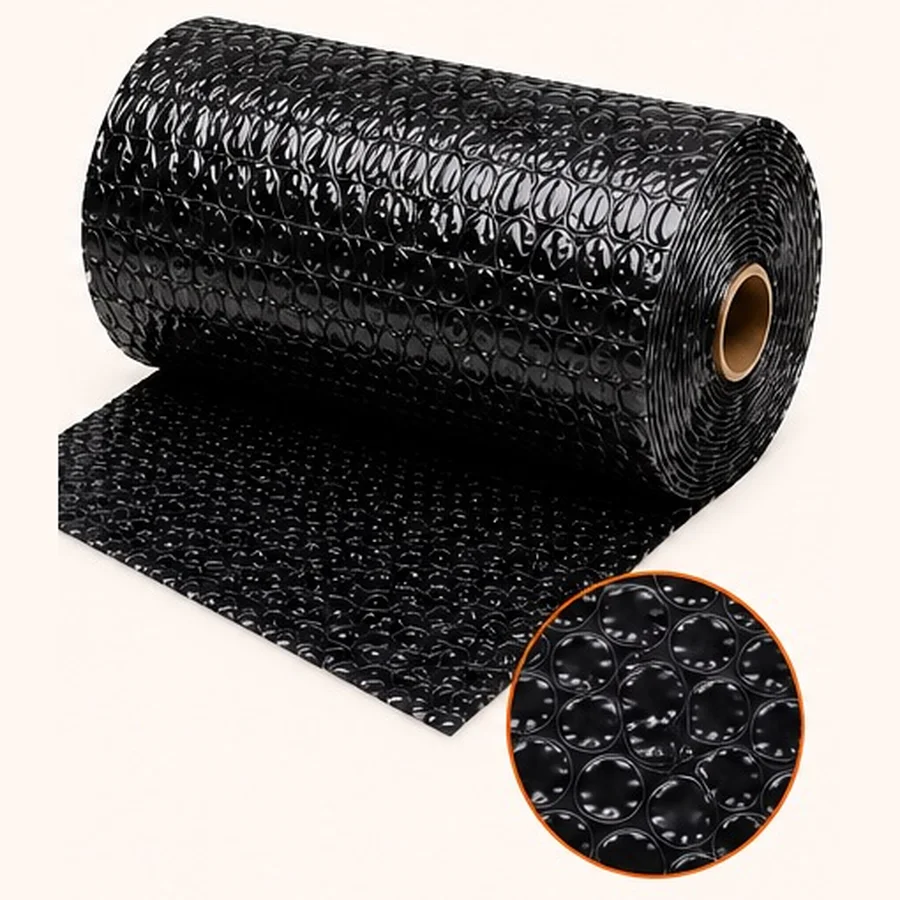
| Private or confidential orders | A black bubble wrap roll in its own marked spot |
Matching roll width to your products means less cutting, fewer offcuts and a neater result. For more on widths, read bubble wrap roll sizes.
Keep every supply within reach
An efficient station puts everything a packer needs within arm's reach. Every step away from the table adds time to every single order.
- Cutting tools: a safety cutter or scissors on a hook or in a fixed holder.
- Tape: a tape dispenser fixed at the sealing end of the table.
- Boxes and bags: the most-used carton boxes, mailer boxes and courier bags on a shelf underneath or beside the table.
- Void fill: offcuts of bubble wrap or other fill in a bin next to the box area.
- Labels and air waybills: near the sealing end, together with a pen or label printer.
- A small bin: for true waste, kept separate from reusable offcuts.
Label each shelf and holder so new staff can find things immediately and supplies go back to the same place every time.
Set clear packing rules
A well-laid-out station works best when everyone follows the same rules. Write a short packing guide and display it at the station. Include which bubble wrap each product type needs, how to wrap it and which box or bag to use.
For example, you might specify transparent single layer for general items, transparent double layer for fragile and higher-value items, and black bubble wrap where customers expect privacy. Keep instructions simple and visual. Photos of correctly packed items work better than long paragraphs. Our guides on how to wrap fragile items and which side of bubble wrap faces in are useful starting points.
Reduce waste and keep stock topped up
Small habits at the packing station add up. Encourage staff to measure before cutting, use offcuts as void fill and avoid wrapping items in more layers than they need. Our guide on bubble wrap packing mistakes covers common problems to avoid.
It also helps to keep a spare roll of each type near the station and a simple note of how many rolls are used each week. Because every roll is 100 m long, counting finished rolls is an easy way to track usage and plan reorders before you run out.
Review and improve regularly
Once your station is running, watch how staff actually use it. Are they walking to fetch tape? Is one roll width always running out first? Are parcels being repacked because of damage? Small adjustments, such as moving a shelf or adding a second roll holder, can make a noticeable difference.
Ask your packers for ideas too. They use the station every day and often spot improvements that managers miss.
Ready to set up your station? Choose from our transparent single layer, transparent double layer and black bubble wrap rolls. For larger quantities, use our bulk order page or WhatsApp us for the latest price.