Which Side of Bubble Wrap Should Face the Item?
Bubbles in or bubbles out? The practical rule most packers follow, why it works, and when it makes sense to turn the wrap around.
By Bubble-Wrap.my Team
Key facts
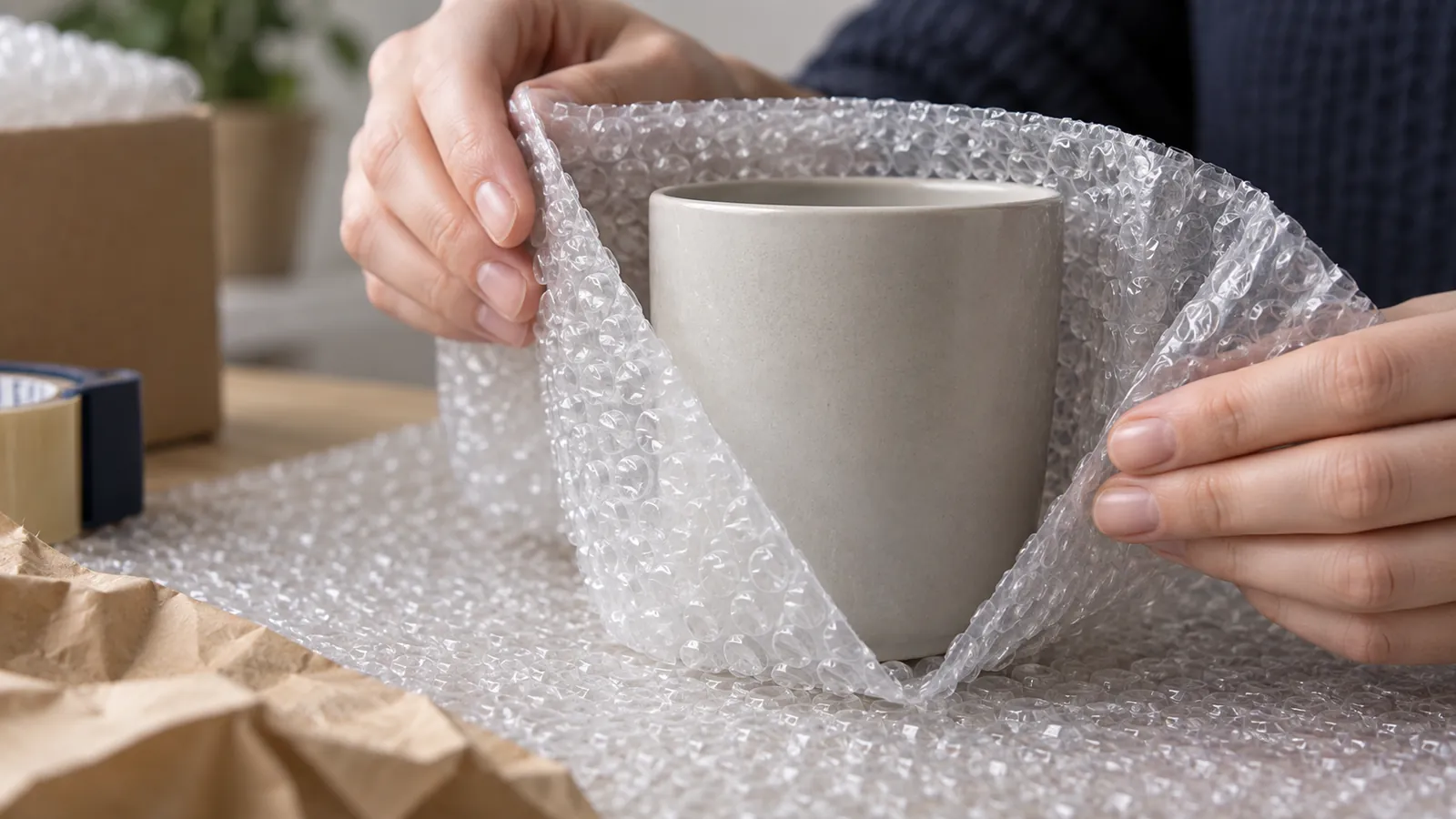
- For most jobs, face the bubbles inward towards the item.
- Bubbles facing in put cushioning against the item and grip it snugly.
- A flat outer side is easier to tape, label and slide into boxes.
- Glossy or freshly finished surfaces may need the flat side in, or a paper layer.
- Direction does not matter when bubble wrap is scrunched as void fill.
- Good technique matters more than direction alone.
It is one of the most common packing questions: when you wrap something in bubble wrap, should the bubbles face the item or face outward? Ask around a warehouse and you will likely hear both answers, given with equal confidence.
This guide explains the practical reasoning behind each side, the general rule most packers follow, and the situations where it makes sense to break that rule.
The short answer
For most packing jobs, face the bubbles inward, towards the item. The flat side goes on the outside.
This is widely treated as the standard approach in general packing. It is practical advice based on how the material behaves in everyday use, not a hard scientific law, and the difference matters more for some items than others.
Why bubbles facing in is the usual choice
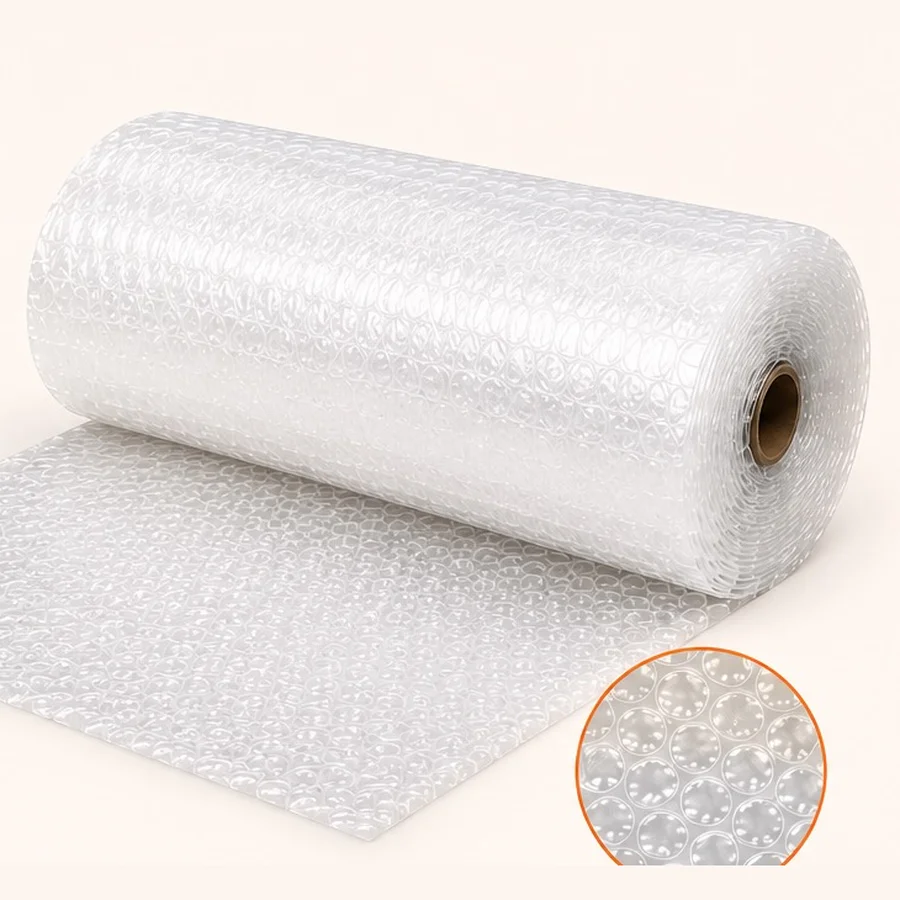
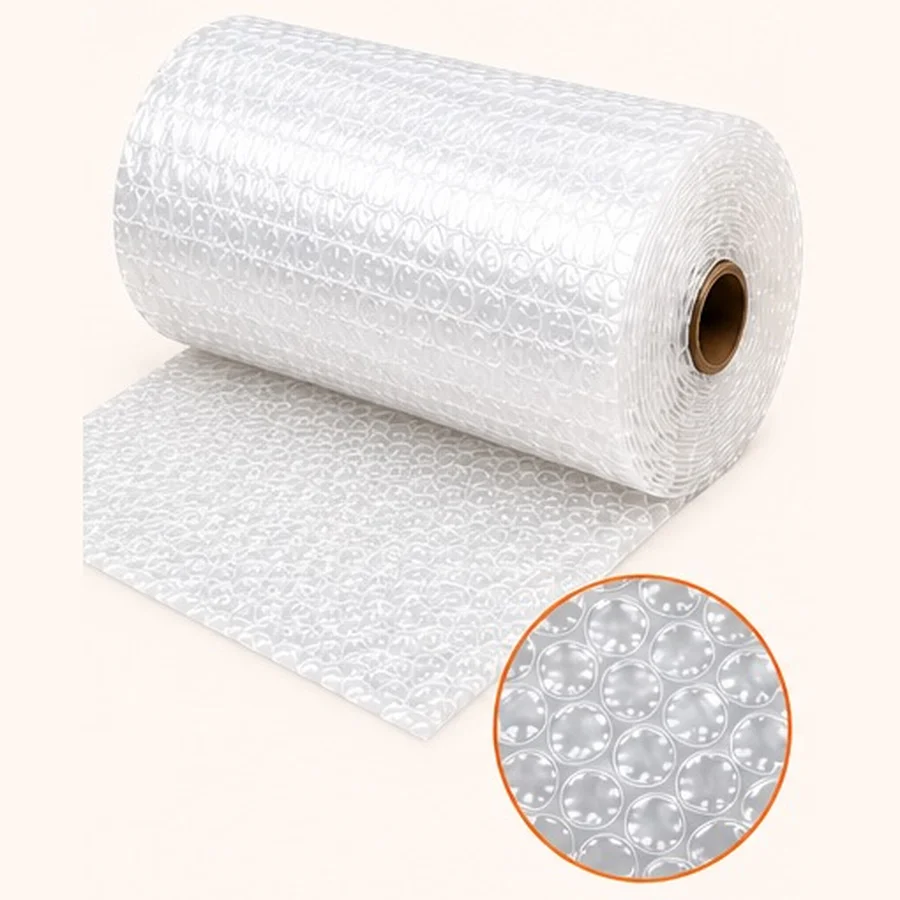
Bubble wrap is a plastic film, usually polyethylene, with pockets of trapped air. The air pockets are what cushion the item. Facing them inward puts that cushioning directly against the surface you want to protect.
- Cushioning sits where it is needed. The bubbles form a soft layer around the item, filling small gaps and following its shape.
- Better grip. The bubbly side tends to hold the item more snugly, so it is less likely to slip inside the wrap.
- Bubbles are shielded. With the flat side outward, the bubbles are less exposed to sharp edges, box corners and rough handling, so fewer of them pop during transit.
- Easier to tape and label. Tape sticks more reliably to the flat outer surface, and a smooth outside is easier to write on.
- Neater bundles. A smooth outer surface slides into boxes more easily and stacks more tidily.
When bubbles facing out can make sense
There are situations where many packers prefer to turn the wrap around.
Delicate or soft finishes
Some surfaces can pick up faint marks from the bubble pattern if they are pressed against the bubbles for a long time, especially under weight or in warm storage. Examples include freshly finished furniture, glossy lacquer, soft plastics and some printed surfaces. For these, many people put the flat side against the item, or add a sheet of plain paper or soft cloth between the item and the bubbles first.
Items already in their own packaging
If you are wrapping an item that is already in its own retail box, the direction matters much less. Some packers face the bubbles outward here so the bubbles act as a bumper between parcels.
Using bubble wrap as void fill
When you scrunch bubble wrap to fill gaps in a box, direction does not really apply. What matters is that there is enough fill to stop the item moving. This is also a good way to use up offcuts from larger rolls.
Quick reference
| Situation | Suggested direction |
|---|---|
| General items, glass, ceramics, electronics | Bubbles facing in |
| Items with irregular shapes that need a snug fit | Bubbles facing in |
| Freshly finished, glossy or easily marked surfaces | Flat side against the item, or add a paper or cloth layer first |
| Items already in their own retail box | Either way; outward can act as a bumper |
| Scrunched as void fill | Not important |
Does it matter for double layer and black bubble wrap?
The same general rule applies across types. With single layer wrap, one side is bubbly and the other side is flat, so the choice is easy to see.
Double layer bubble wrap gives added cushioning and shock absorption for fragile and higher-value products, and it can look and feel much the same on both sides. If you cannot tell the sides apart, direction matters less. Concentrate on using enough wrap and covering every surface, and add a paper or cloth layer first if the item has an easily marked finish.
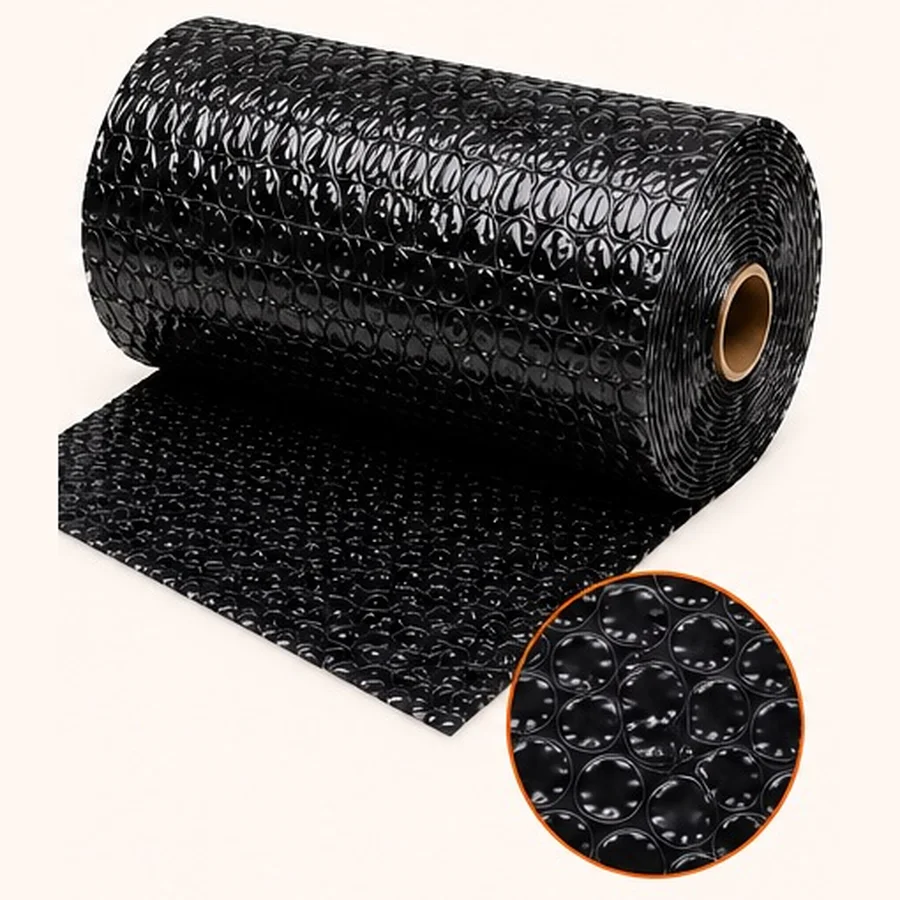
Black bubble wrap follows the same approach. Its main difference is that the opaque film conceals the contents for privacy and security, which does not change which way it should face. For more on the differences, see single vs double layer bubble wrap and clear vs black bubble wrap.
Direction matters less than good technique
Getting the bubbles the right way round helps, but it will not save a poorly packed parcel. These points usually make a bigger difference:
- Use enough wrap. Cover every surface, with overlap and both ends closed.
- Protect weak points. Give handles, corners, rims and screens extra wrap first.
- Wrap snugly without crushing. Squashed bubbles cannot cushion anything.
- Stop movement in the box. Cushion the base and sides and fill all gaps.
- Choose the right grade. Use double layer wrap for fragile or higher-value items.
Our step-by-step guide on how to wrap fragile items covers the full method, and common bubble wrap packing mistakes lists the errors worth avoiding.
Train your team on one simple rule
For businesses, consistency is more valuable than debate. Pick a standard for your packing table, such as "bubbles facing in, except for glossy or freshly finished surfaces", and make sure everyone follows it. Put a short note at the packing station so new staff learn it on their first day.
It also helps to review any damaged returns together. If a breakage happens, look at how the item was wrapped and packed rather than blaming the direction of the bubbles straight away. More often, the cause is too little wrap, an unprotected corner or an item that was free to move inside the box. Fixing those habits does far more for your damage rate than any debate about bubbles in or out.
Find the right bubble wrap for the job
IAM Worldwide manufactures bubble wrap locally in Klang, Selangor, in 100 m rolls. Choose Transparent Single Layer Bubble Wrap for general packing, Transparent Double Layer Bubble Wrap for fragile items, or Black Bubble Wrap for private shipments. For regular supply, visit our bulk order page or WhatsApp us for the latest price.