Bubble Wrap vs Air Column, Paper and Foam: Choosing Cushioning
A plain comparison of bubble wrap, air column bags, paper and foam, with guidance on which cushioning suits your products and packing table.
By Bubble-Wrap.my Team
Key facts
- Bubble wrap is the most versatile option for mixed product shapes.
- Air column bags suit single products shipped repeatedly in the same shape.
- Paper works well as void fill and for separating items.
- Foam gives firm, shaped support for precision or repeat products.
- Many businesses combine bubble wrap with a void fill.
- IAM supplies bubble wrap in 100 m rolls plus air column bags.
Bubble wrap is not the only way to cushion a parcel. Air column bags, paper and foam all have their place, and many businesses use more than one. The right choice depends on what you ship, how fragile it is, how much space you have and how fast you need to pack.
This guide compares the main cushioning options in plain terms so you can decide what belongs on your packing table.
The main cushioning options at a glance
Each material protects in a slightly different way. Here is a quick comparison before we look at each one in more detail.
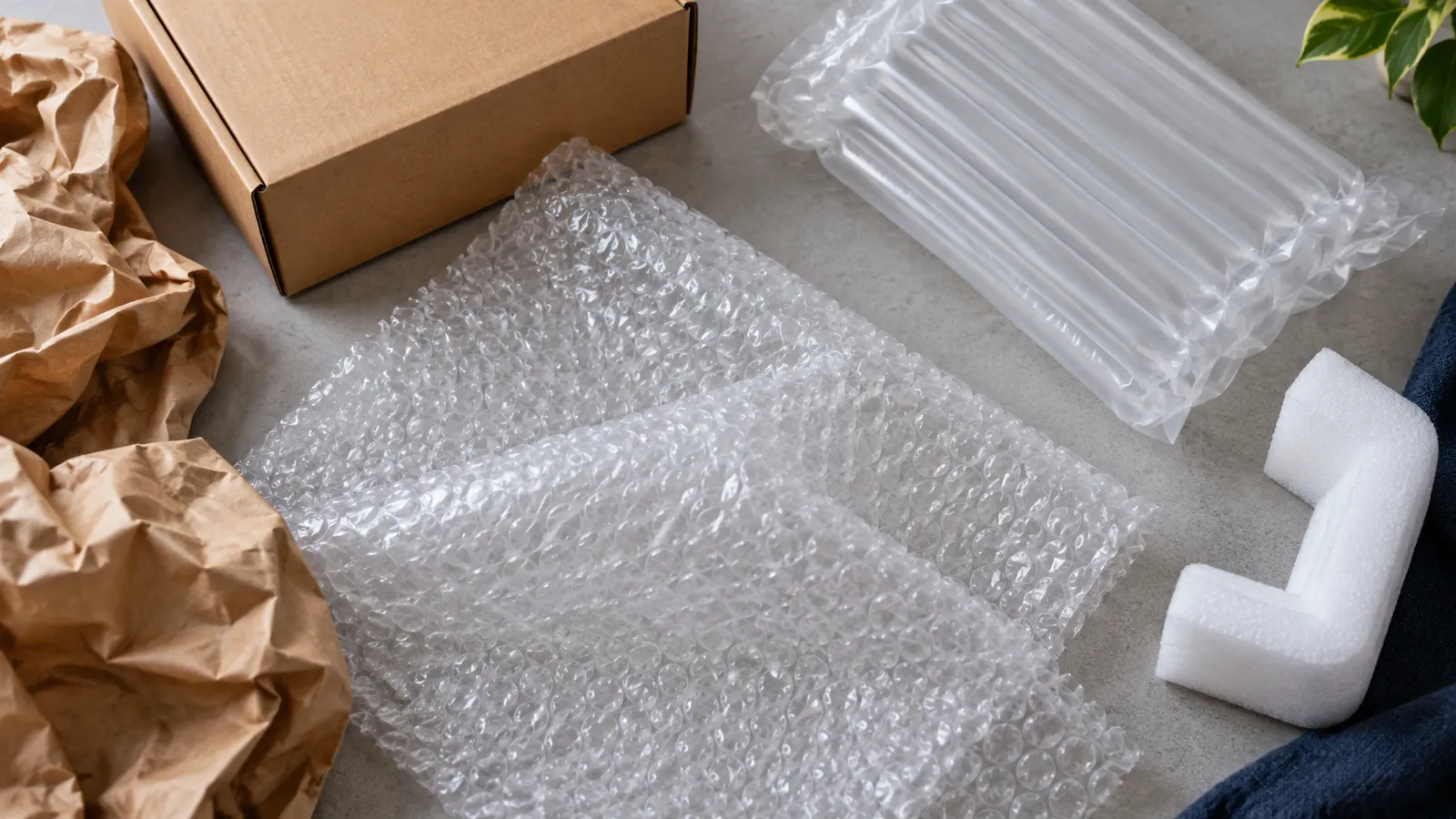
| Material | Main strengths | Main limitations | Typical uses |
|---|---|---|---|
| Bubble wrap | Versatile, lightweight, wraps most shapes, surface protection | Takes shelf space as rolls; can be marked or popped by sharp edges | General goods, fragile items, e-commerce, moving |
| Air column bags | Strong cushioning around a single item; compact before inflation | Sized for specific products; needs inflating | Bottles, cosmetics, electronics, gift items |
| Paper | Good for filling gaps and interleaving; familiar and easy to handle | Less cushioning for its bulk; can be heavier | Void fill, separating plates, light protection |
| Foam | Firm, can be shaped or cut to fit | Bulkier to store; often needs to be cut to size | Precision parts, instruments, repeat products |
Bubble wrap: the all-rounder
Bubble wrap is a plastic film, usually polyethylene, with pockets of trapped air that cushion impact. It is one of the most flexible packing materials because a single roll can wrap items of almost any shape.
- Cushioning and surface protection in one layer, guarding against knocks and scratches.
- Light weight, so it adds little to the parcel.
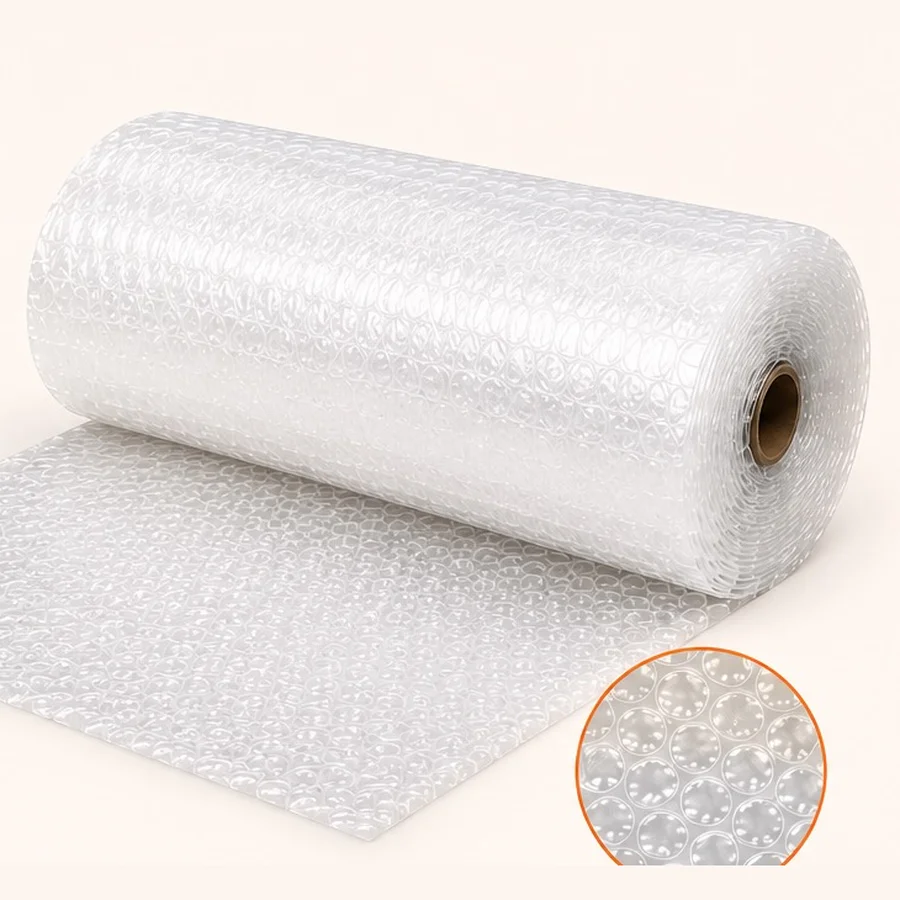
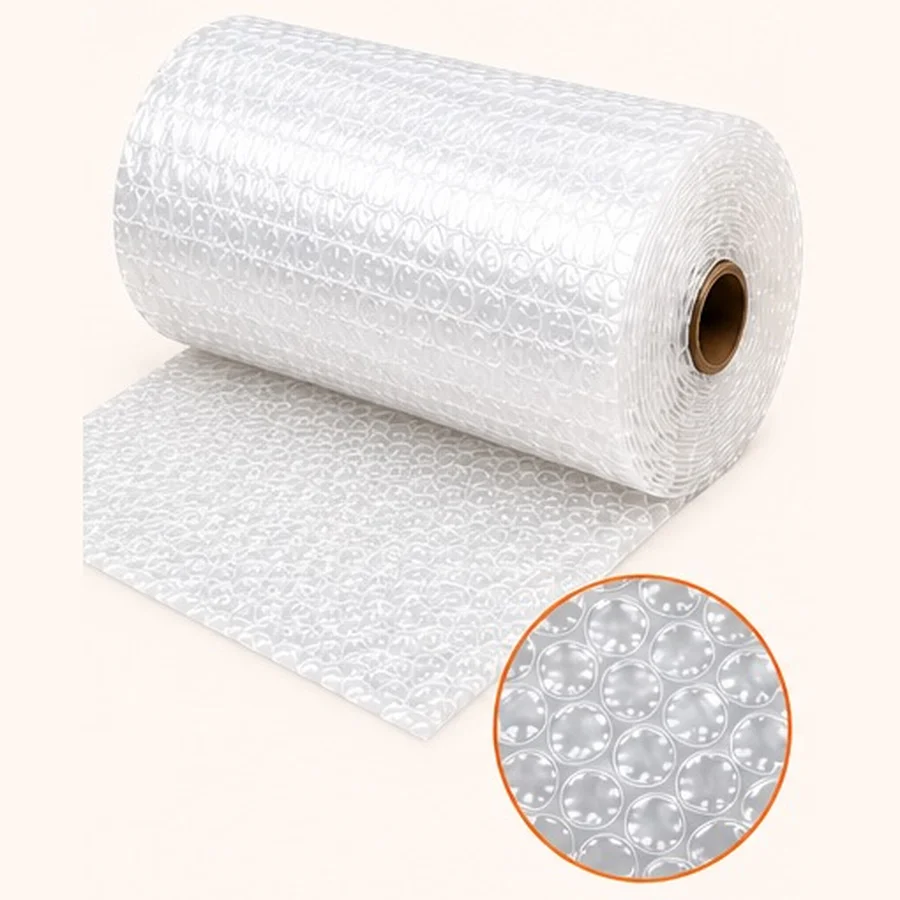
- Grades for different risks. Single layer suits general goods; double layer adds extra cushioning and shock absorption for fragile and higher-value items.
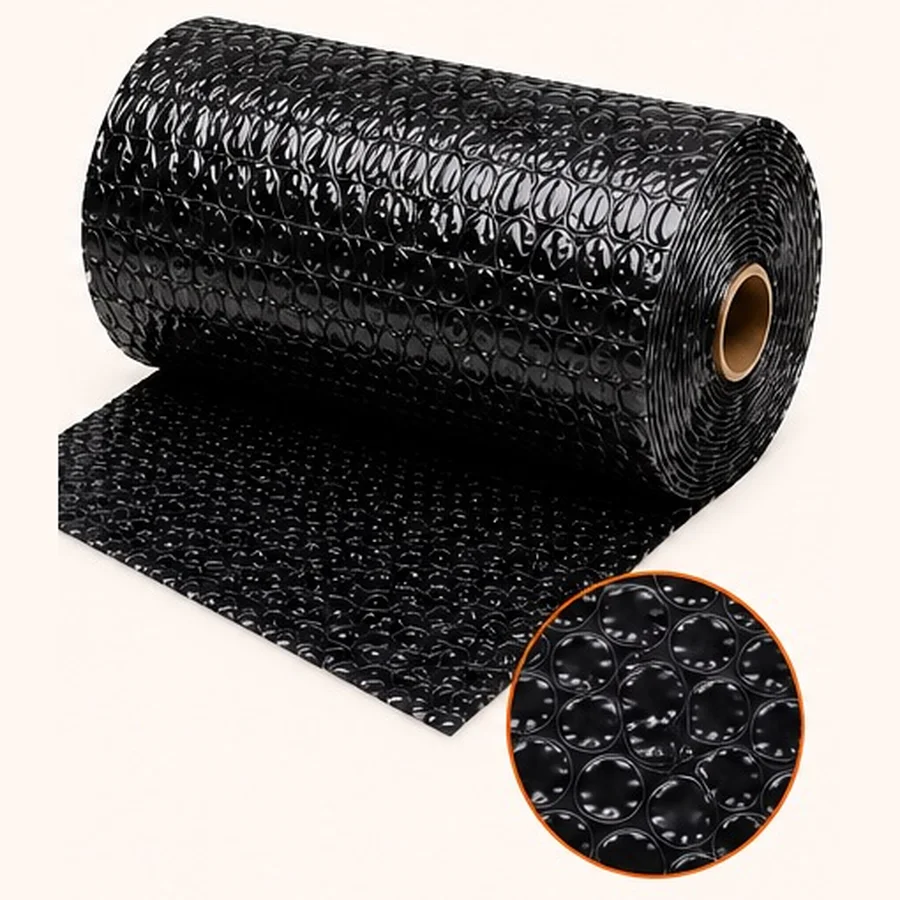
- Privacy option. Black bubble wrap hides the contents of confidential or high-value shipments.
- Easy to cut to size, and offcuts double as void fill.
If you only stock one cushioning material, bubble wrap is usually the sensible default. Learn more in what is bubble wrap.
Air column bags: tailored protection for single items
Air column bags are sleeves made of connected air-filled columns that surround a product once inflated. Because the columns are separate, one damaged column does not deflate the whole bag.
They work well for products you ship repeatedly in the same shape, such as bottles, cosmetics or small electronics. They are compact to store before inflation, but you need the right size for each product and a way to inflate them. For mixed catalogues, bubble wrap is usually more flexible.
Air column bags and bubble wrap are not rivals so much as partners. A shop selling skincare might use air column bags for its best-selling bottles and keep a roll of bubble wrap for gift sets, bundles and one-off items that do not fit a standard bag.
Paper: simple fill and interleaving
Crumpled or folded paper is handy for filling gaps and for separating items such as plates. It is familiar and easy to use.
Paper gives less cushioning for its bulk than air-based materials, so it is best suited to lighter protection or as void fill around items that have already been wrapped. It also does not guard against moisture. It can be a good partner to bubble wrap rather than a replacement for it.
Foam: firm, shaped protection
Foam sheets and inserts give firm, consistent support and can be cut to hold a product in place. That makes them useful for delicate instruments, precision parts or high-value items shipped in the same shape every time.
The trade-off is storage space and preparation time. Custom inserts suit repeat products; for varied orders, bubble wrap is quicker to adapt. Foam is also less forgiving of change: if your product range shifts, shaped inserts may no longer fit, whereas a roll of bubble wrap simply gets cut differently.
Which cushioning should you choose?
Ask yourself a few simple questions:
- How fragile is the item? For glass, ceramics and higher-value goods, use double layer bubble wrap, air column bags or foam.
- How varied are your products? Mixed shapes and sizes favour bubble wrap because it adapts to anything.
- Do you ship the same product repeatedly? Air column bags or foam inserts may speed things up.
- Does privacy matter? Black bubble wrap hides the contents.
- How much storage space do you have? Consider how each material is stored before use.
There is rarely one perfect answer. The goal is a combination that protects your products reliably, keeps packing quick and suits the space you have.
Many businesses combine materials: bubble wrap around the item, then paper or scrunched bubble wrap offcuts as void fill. Stretch film is sometimes used to hold bundles together, but it is not a cushioning material in its own right.
For practical technique, see how to wrap fragile items and bubble wrap for e-commerce sellers.
A note on recycling and reuse
Bubble wrap in good condition can often be reused several times for storage or future parcels. When it can no longer be used, check with your local recycler whether they accept plastic film. Our guide on storing, reusing and disposing of bubble wrap has more tips.
Get your cushioning from one supplier
IAM Worldwide manufactures bubble wrap locally in 100 m rolls and also supplies air column bags, bubble mailers, carton boxes and tape. Choose Transparent Single Layer Bubble Wrap, Transparent Double Layer Bubble Wrap or Black Bubble Wrap, then request a quote on our bulk order page or WhatsApp us for the latest price.