Bubble Wrap for Moving House or Office: What to Wrap and How
What to bubble wrap when moving house or office, how to wrap plates, glasses, mirrors and screens, and which roll to choose.
By Bubble-Wrap.my Team
Key facts
- Focus bubble wrap on items that can break, chip, scratch or dent
- Double layer bubble wrap suits glass, mirrors and screens
- Single layer bubble wrap covers kitchenware, frames and furniture surfaces
- Black bubble wrap keeps office equipment and stock out of sight
- Every IAM roll is 100 m long, in widths from 0.2 m to 1 m
- Clean bubble wrap can be kept and reused after the move
Moving house or office is one of the few times most people handle every fragile thing they own in a single week. Plates, glasses, mirrors, monitors, framed photos and small appliances all leave their usual spots and ride in a lorry together. Bubble wrap is the simplest way to stop them knocking into each other on the way.
This guide covers what is worth wrapping, how to wrap the most common household and office items, how to plan the amount you need, and how to keep the whole move organised. It is written for families moving flats as well as businesses relocating a shop, office or small warehouse.
Why bubble wrap works so well for a move
Bubble wrap is a plastic film, usually polyethylene, with rows of air bubbles trapped inside. Those bubbles cushion impact and stop surfaces rubbing against each other. During a move, items are lifted, stacked, carried down stairs, loaded and unloaded several times, so small knocks add up quickly.
It also has a few practical advantages over newspaper or old towels:
- It is clean. No ink smudges on white plates or pale furniture.
- It is light. It adds very little weight to each box, which matters when you are carrying boxes yourself.
- Clear film lets you see what is inside. You can spot the item you need at the new place without unwrapping everything.
- It can be reused. After the move, the same film can protect items in storage or be passed on to a friend.
What to wrap, and what you can skip
Not everything needs bubble wrap. Soft items such as clothes, bedding, cushions and soft toys protect themselves, and can even be used as extra padding in boxes. Focus your film on anything that can break, chip, scratch or dent.
A simple way to decide is to sort items into three groups:
| Group | Examples | Suggested protection |
|---|---|---|
| Fragile and valuable | Glassware, ceramics, mirrors, glass tabletops, TVs, monitors, artwork, decorative pieces | Double layer bubble wrap, several turns, sturdy carton |
| Can scratch or chip | Wooden furniture corners, picture frames, small appliances, lamps, kitchenware | Single layer bubble wrap on surfaces and corners |
| Robust or soft | Books, clothes, linen, plastic containers, tools in cases | No bubble wrap needed; use as filler in boxes |
For an office move, add computers, printers, phones, framed certificates, display stands and any sample stock to the first two groups. Anything with a screen deserves extra care.
How to wrap the usual suspects
Plates and bowls
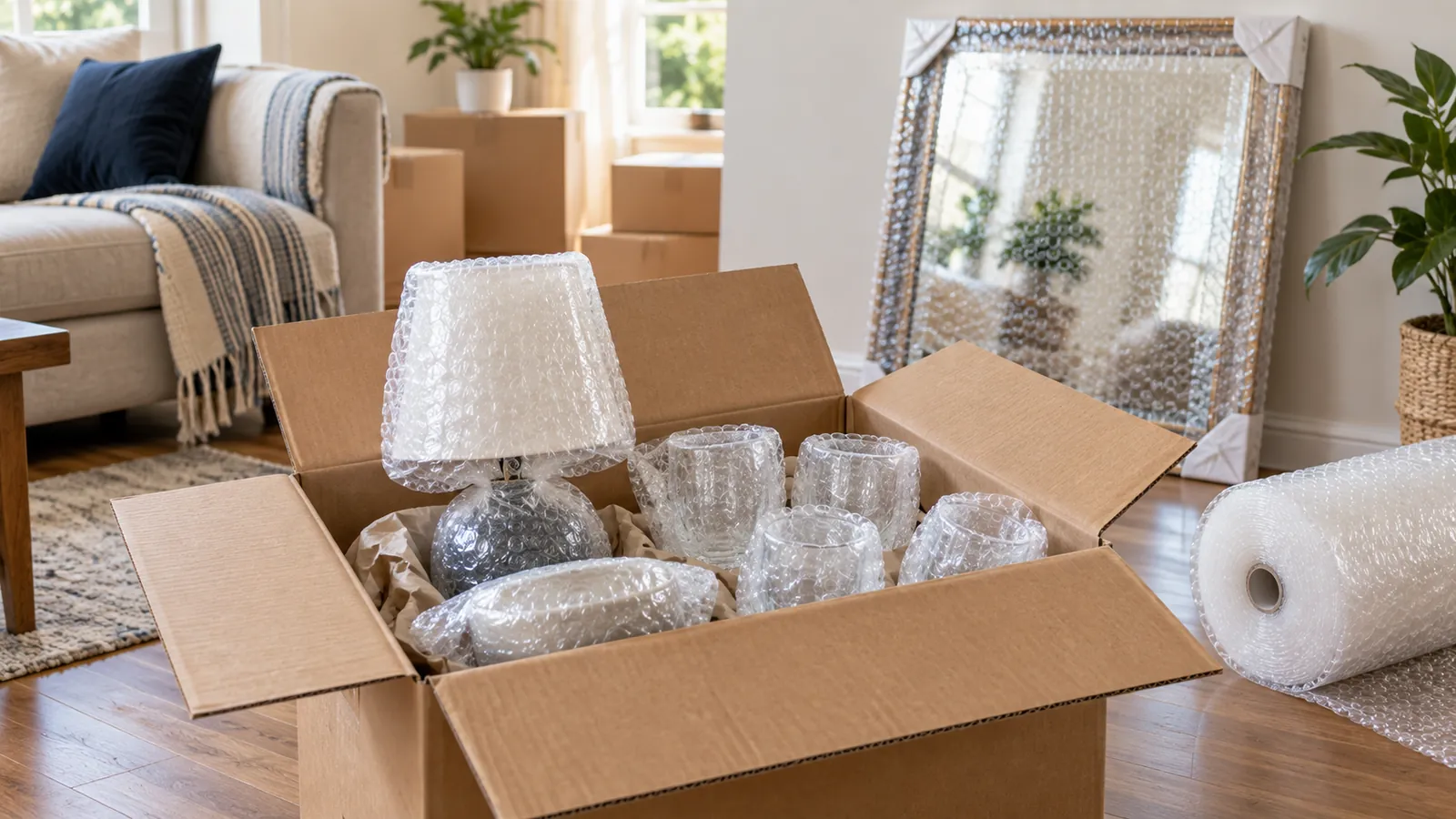
Wrap each plate individually, then stack a few wrapped plates together and wrap the stack again. Pack plates standing on their edge in the box, like records, rather than lying flat. This spreads any knock along the strongest part of the plate.
Glasses and mugs
Stuff a small piece of bubble wrap or paper inside each glass first, then roll the glass in film, folding in the ends. Handles on mugs are weak points, so give them an extra turn of wrap.
Mirrors, frames and glass panels
Protect the corners first, since they take most of the knocks. Then wrap the whole piece in double layer bubble wrap and tape it closed. Move them standing upright, never lying flat under other things.
TVs, monitors and electronics
If you still have the original box and inserts, use them. If not, wrap the screen with bubble wrap, secure it with tape on the film only (never on the screen itself), and place it upright in a snug carton or carry it separately. Remove cables, bag them, and label which device they belong to.
Furniture
Wrap table legs, chair legs, cabinet corners and glass doors. Remove drawers and shelves where possible and wrap them separately. For large flat pieces, the 1 m wide roll covers a lot of surface in one pass.
Choosing the right bubble wrap for your move
All IAM Worldwide rolls are 100 m long, so even a single roll goes a long way for a household move. The choice is mainly about how much protection each item needs and how wide a sheet you want to work with.
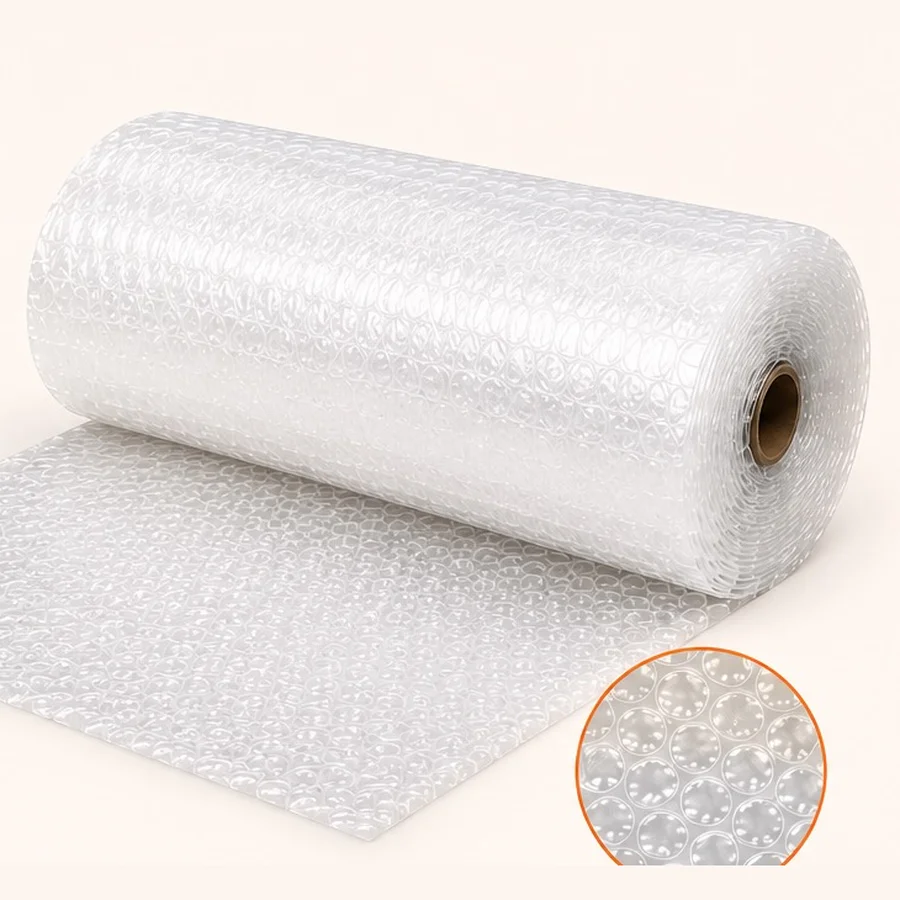
- Transparent Single Layer Bubble Wrap is the lowest-cost option and is ideal for general wrapping: kitchenware, frames, furniture surfaces and small items. It comes in widths from 0.2 m to 1 m.
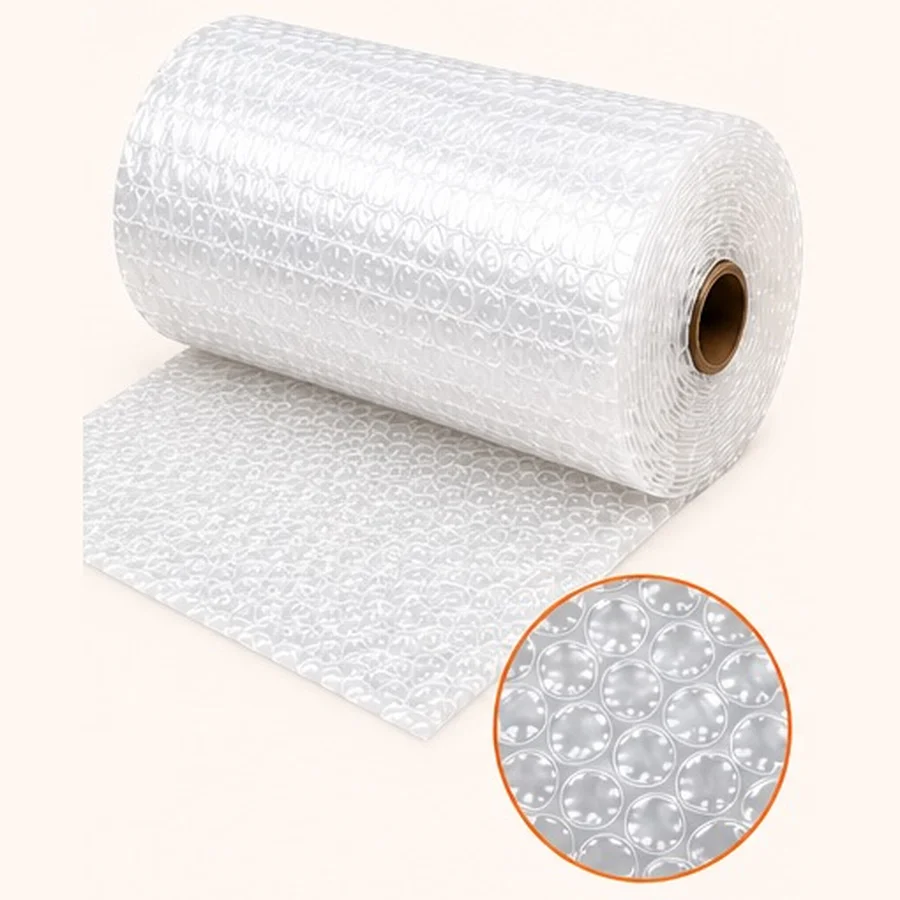
- Transparent Double Layer Bubble Wrap gives extra cushioning and shock absorption for glass, mirrors, screens and higher-value pieces. It comes in widths from 0.25 m to 1 m.
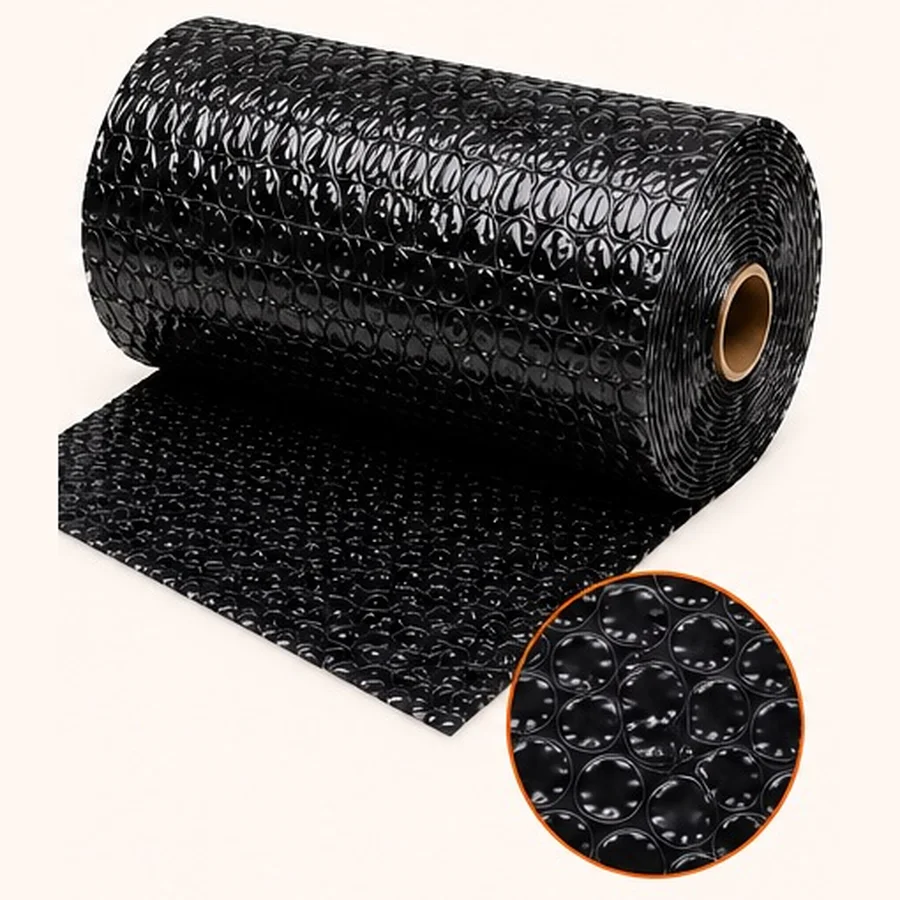
- Black Bubble Wrap is opaque. It is useful for office moves where equipment, documents or stock should not be visible to anyone passing by the lorry.
Narrow rolls such as 0.25 m or 0.33 m are easy to handle when wrapping glasses and small items at the kitchen counter. The 0.5 m and 1 m widths suit furniture, mirrors and larger appliances. Many households find one narrow roll plus one wide roll covers the whole move. If you are unsure, see our guide to roll sizes.
Packing the boxes
Good wrapping can be undone by a badly packed box. Keep these points in mind:
- Use sturdy cartons. Old boxes that have been wet or crushed lose their strength.
- Heavy at the bottom, light on top. Put wrapped plates and heavier items at the base, glasses and ornaments near the top.
- Fill the gaps. Items should not shift when you gently shake the box. Use scrunched bubble wrap, towels or clothes as filler.
- Do not overfill. A bulging lid gets crushed when boxes are stacked.
- Tape properly. Seal the bottom seam and the top seam firmly with packing tape.
- Label clearly. Write the room and "FRAGILE" with an arrow showing which way is up on at least two sides.
For more detail on technique, read our step-by-step guide on how to wrap fragile items, and check common packing mistakes before you start.
Tips for office and shop relocations
Business moves have a few extra concerns. Equipment is often shared, downtime costs money, and some items are confidential.
- Plan by department or zone. Give each area its own colour label or code so boxes go straight to the right place.
- Photograph cable set-ups before unplugging computers, printers and network equipment.
- Keep sensitive items private. Black bubble wrap hides files, devices and stock from view during loading and unloading.
- Protect display fixtures. Shop shelving, glass counters and signage are easy to scratch; wrap edges and faces before they are dismantled.
- Order enough in advance. Running out halfway through packing slows the whole team down. For larger moves, a bulk order is usually simpler.
After the move
Once everything is unpacked, do not throw the bubble wrap away straight away. Flatten or roll up clean pieces and keep them for storage, future deliveries, or the next move. Our guide on storing, reusing and disposing of bubble wrap explains how.
Ready to pack? Browse our Transparent Single Layer Bubble Wrap, Transparent Double Layer Bubble Wrap and Black Bubble Wrap, or see all bubble wrap. For larger quantities, request a bulk quote or WhatsApp us for the latest price.