Packing Glassware, Ceramics and Kitchenware Safely
Step-by-step methods for wrapping plates, bowls, glasses, mugs and pots, and packing them into boxes so nothing chips or cracks.
By Bubble-Wrap.my Team
Key facts
- Most breakage comes from items touching, sliding or taking pressure on thin parts.
- Wrap each piece individually and stuff hollow items before wrapping.
- Stand plates on their edge and put glasses upright in the top layer.
- Double layer wrap suits stemware and other fragile, higher-value pieces.
- Transparent wrap lets you see what is inside each bundle.
- All IAM bubble wrap rolls are 100 m long.
Glasses, plates, bowls and ceramic pieces are among the items most likely to break in transit. They are hard, brittle and often shipped in sets, so a single weak spot in the packing can mean several broken pieces instead of one.
The good news is that glassware and ceramics are very manageable with the right method. This guide covers how to sort, wrap and box each type of item, from stemware to heavy pots, whether you are a household moving kitchen or a seller shipping tableware.
Why glass and ceramics break in transit
Most breakage comes from three things: items knocking against each other, items sliding inside a box with empty space, and pressure on a thin part such as a rim, stem or handle. A heavy drop is not always needed. Two plates rubbing together through a long journey can chip, and a glass with nothing inside it can crack when the box is squeezed.
Bubble wrap deals with all three. The air trapped in the bubbles cushions impact, the wrap keeps each piece separate, and extra wrap fills the space so nothing moves.
Sort and prepare before you wrap
Group items by shape and weight before starting. Wrapping all the plates, then all the bowls, then all the glasses is faster than working piece by piece, and it makes packing the box easier.
- Clean and dry everything. Wet or greasy items can mark and are harder to wrap neatly.
- Remove lids and loose parts. Teapot lids, jar lids and removable handles are wrapped separately.
- Stuff hollow items. Fill the inside of glasses, cups and vases with crumpled paper or a small ball of wrap so the walls have support.
- Prepare sturdy cartons. Smaller boxes are better for heavy kitchenware, so they stay manageable to lift.
Choosing the right roll
For most kitchenware, the choice comes down to how fragile and valuable the item is and how big it is. All our rolls are 100 m long.
| Item | Suggested roll | Why |
|---|---|---|
| Wine glasses, stemware, thin glass | Double layer, 0.25 m or 0.33 m | Extra cushioning for the most fragile pieces |
| Plates, bowls, mugs | Single or double layer, 0.33 m or 0.5 m | Wide enough to wrap each piece in one pass |
| Vases, serving dishes, decorative ceramics | Double layer, 0.5 m | Better protection for higher-value or awkward shapes |
| Pots, pans, trays | Single layer, 0.5 m or 1 m | Mainly scratch and surface protection |
| Lining and topping boxes | Single layer, 1 m | Quick coverage for large areas |
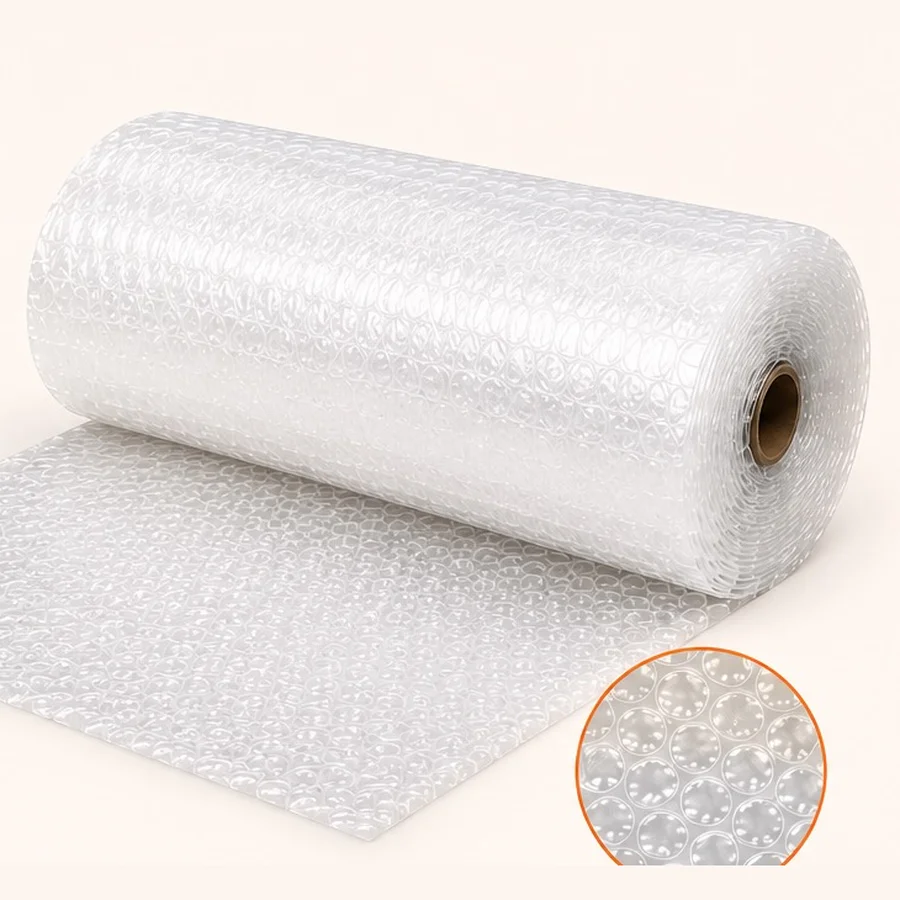
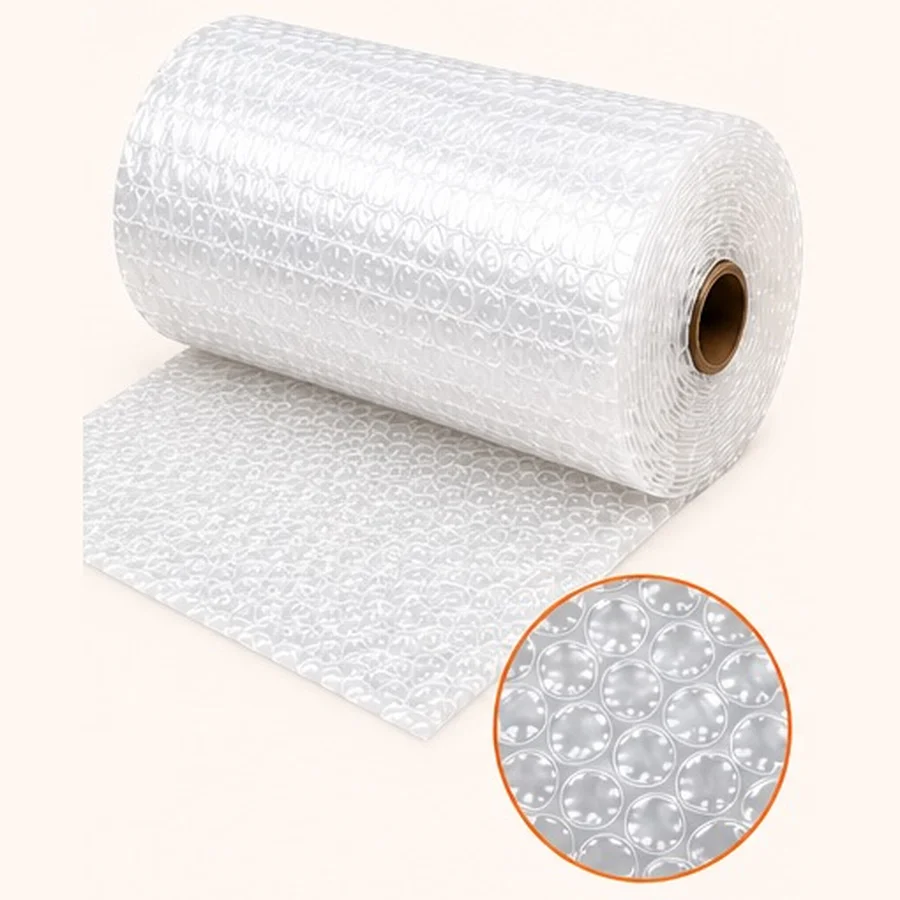
Transparent wrap is handy here because you can see what is inside each bundle without unwrapping it, which helps when unpacking a full kitchen or checking an order.
Wrapping each type of item
Plates and saucers
Wrap each plate individually. For light, everyday plates, you can place a sheet of wrap between each one and then wrap a small stack of them together as a bundle. Keep bundles small so they are not too heavy.
Bowls
Wrap individually, or nest bowls of the same size with a layer of wrap between each one, then wrap the nested set.
Glasses and stemware
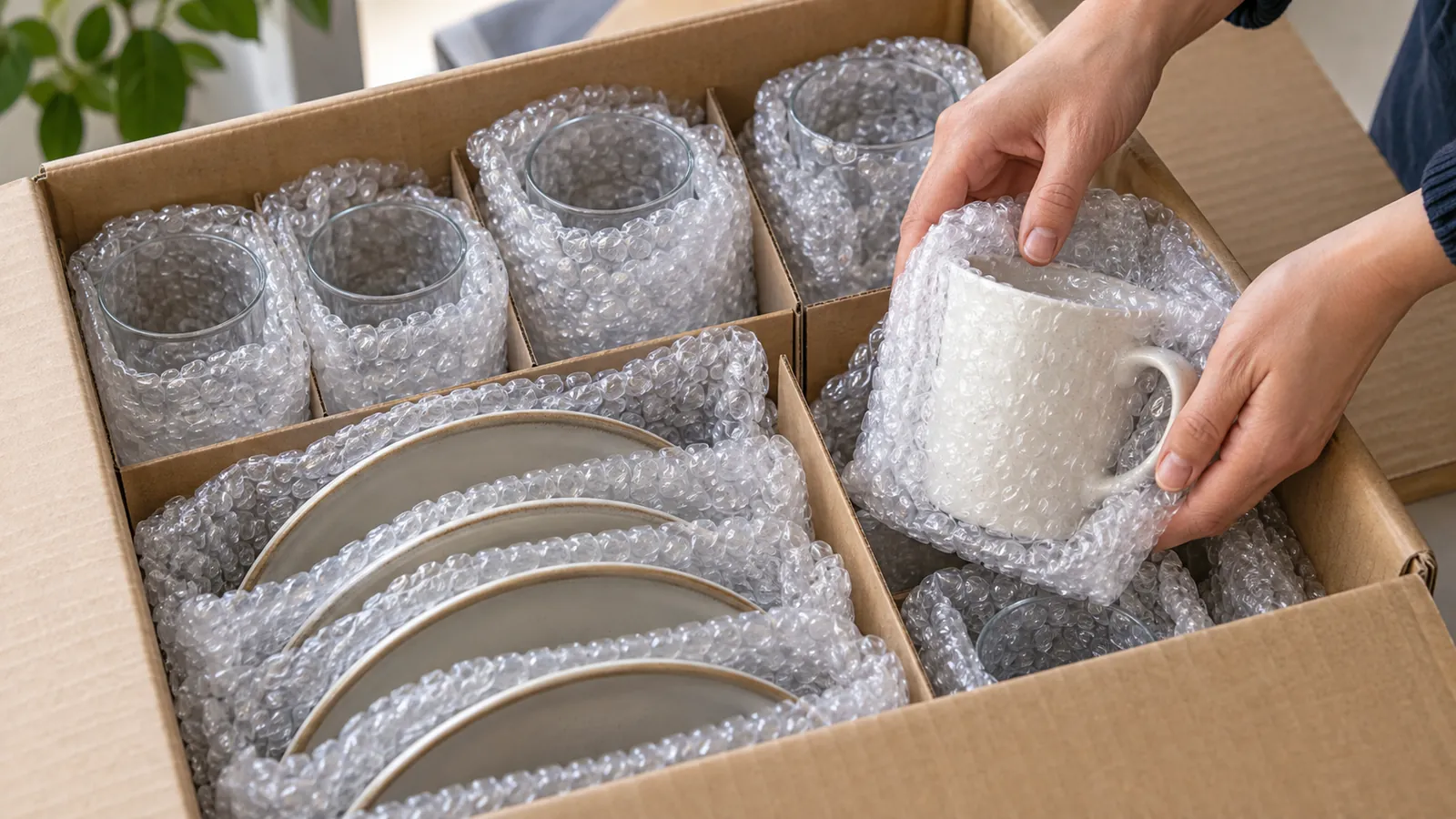
Stuff the bowl of the glass first. Wrap a small strip around the stem, then roll the whole glass in wrap from the rim down, folding the ends in. Never nest glasses inside each other.
Mugs, cups and jugs
Give handles and spouts a small extra wrap before wrapping the whole piece, since these are the easiest parts to snap off.
Pots, pans and knives
Pots and pans need less cushioning but benefit from wrap to stop scratches and to protect other items from their weight. For knives, cover each blade with folded cardboard first, then wrap, and mark the bundle clearly so nobody is cut when unpacking.
Packing the box
How you load the box matters as much as how you wrap each piece.
- Line the bottom with a layer of wrap.
- Heaviest items go in first, such as pots and serving dishes.
- Stand plates on their edge, side by side, rather than laying them flat. This spreads pressure better if the box is bumped.
- Glasses and stemware go on top, upright, in the lightest layer.
- Fill every gap with more wrap until nothing moves when you gently shake the box.
- Add a top layer, seal the box and mark it as fragile with an arrow showing which way is up.
Cardboard dividers are useful for sets of glasses. Avoid packing boxes so heavy that they are hard to lift, since heavy boxes are more likely to be dropped. For more on general technique, see how to wrap fragile items.
Tips for sellers shipping tableware
If you sell glassware or ceramics online, standardise your method. Decide which roll and how many layers each product gets, and write it down at the packing station so every order is packed the same way. A test shipment to yourself or a colleague is a practical way to check that a method works before using it for customer orders.
Sets should be packed so that each piece is wrapped individually and none touch. If an order is a gift, black bubble wrap keeps the contents hidden. Our guides to bubble wrap for e-commerce and bubble wrap packing mistakes have more ideas for reducing breakage and returns.
Unpacking safely
Open boxes from the top and lift bundles out carefully. Use scissors on the tape rather than a blade pushed deep into the box, which can scratch or cut what is inside. Check the packing material for small pieces such as lids before throwing it away. Clean, undamaged wrap can be kept for next time, as explained in storing and reusing bubble wrap.
For glassware and ceramics, use transparent double layer bubble wrap for fragile pieces and single layer bubble wrap for everyday items, lining and pots and pans. For regular orders, request a quote on our bulk order page or WhatsApp us for the latest price.