Wrapping Frames, Mirrors and Artwork with Bubble Wrap
Protect framed prints, mirrors and canvases in transit or storage: pad the corners, shield the surface and cushion the whole piece.
By Bubble-Wrap.my Team
Key facts
- Pad frame corners first, since they usually take the first impact.
- Put a smooth barrier sheet between artwork and bubble wrap.
- Tape bubble wrap to itself, never directly to a frame or finish.
- Double layer bubble wrap suits mirrors and glass-fronted frames.
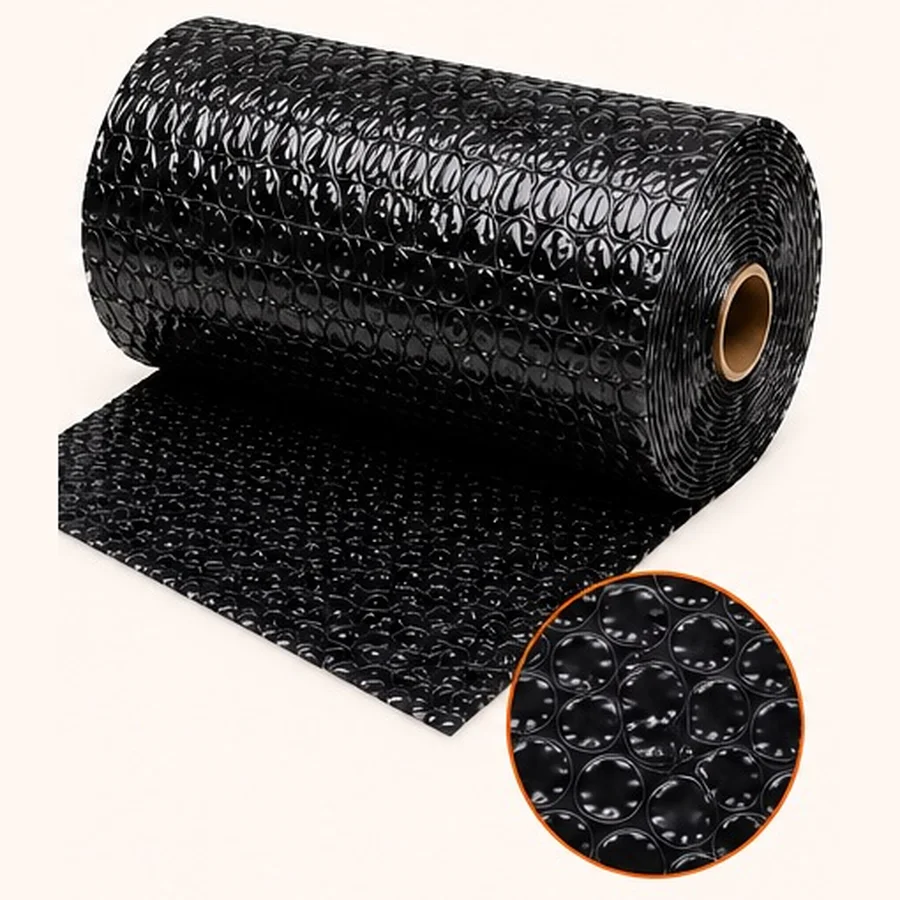
- Black bubble wrap conceals high-value art for privacy and security.
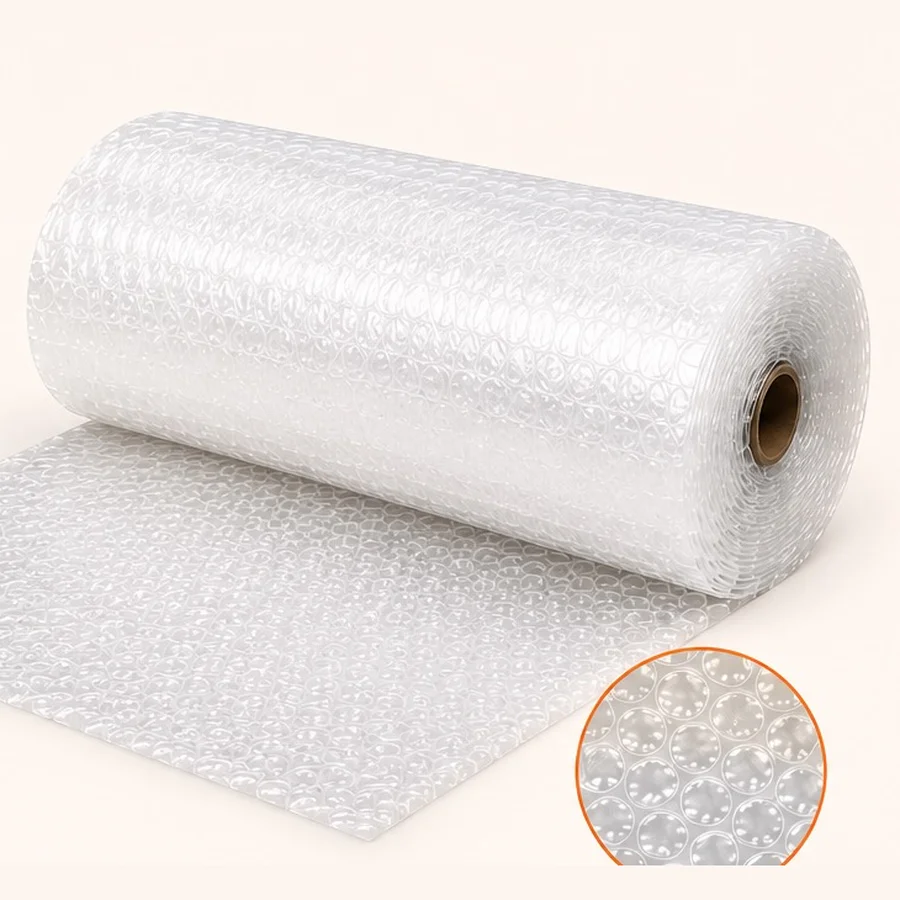
- Clear rolls come in widths up to 1 m, all 100 m long.
Framed prints, mirrors, canvases and certificates look sturdy on the wall, but they are some of the easiest items to damage in transit or storage. A knocked corner can split a frame joint, a small point of pressure can crack glass, and a rough surface can scratch a finish that took hours to get right.
The good news is that most of this damage is preventable with the right wrapping order: protect the surface, pad the corners, cushion the whole piece, then box it snugly. This guide walks through that process for frames, mirrors and artwork, whether you are an art seller shipping to customers or a business moving office décor.
Why frames, mirrors and artwork need extra care
Flat, framed items combine several weak points in one object. Glass and mirror panels are brittle and can crack if the frame flexes. Corners take the first hit whenever a parcel is dropped or set down at an angle. Painted and varnished surfaces can pick up scuffs, fingerprints or marks from whatever they are pressed against.
Because these pieces are often thin and wide, they also tend to lean, slide and get stacked against other items. That means pressure can come from the face and back, not just from the edges. Good wrapping deals with all three: surface, corners and overall impact.
Start with the corners
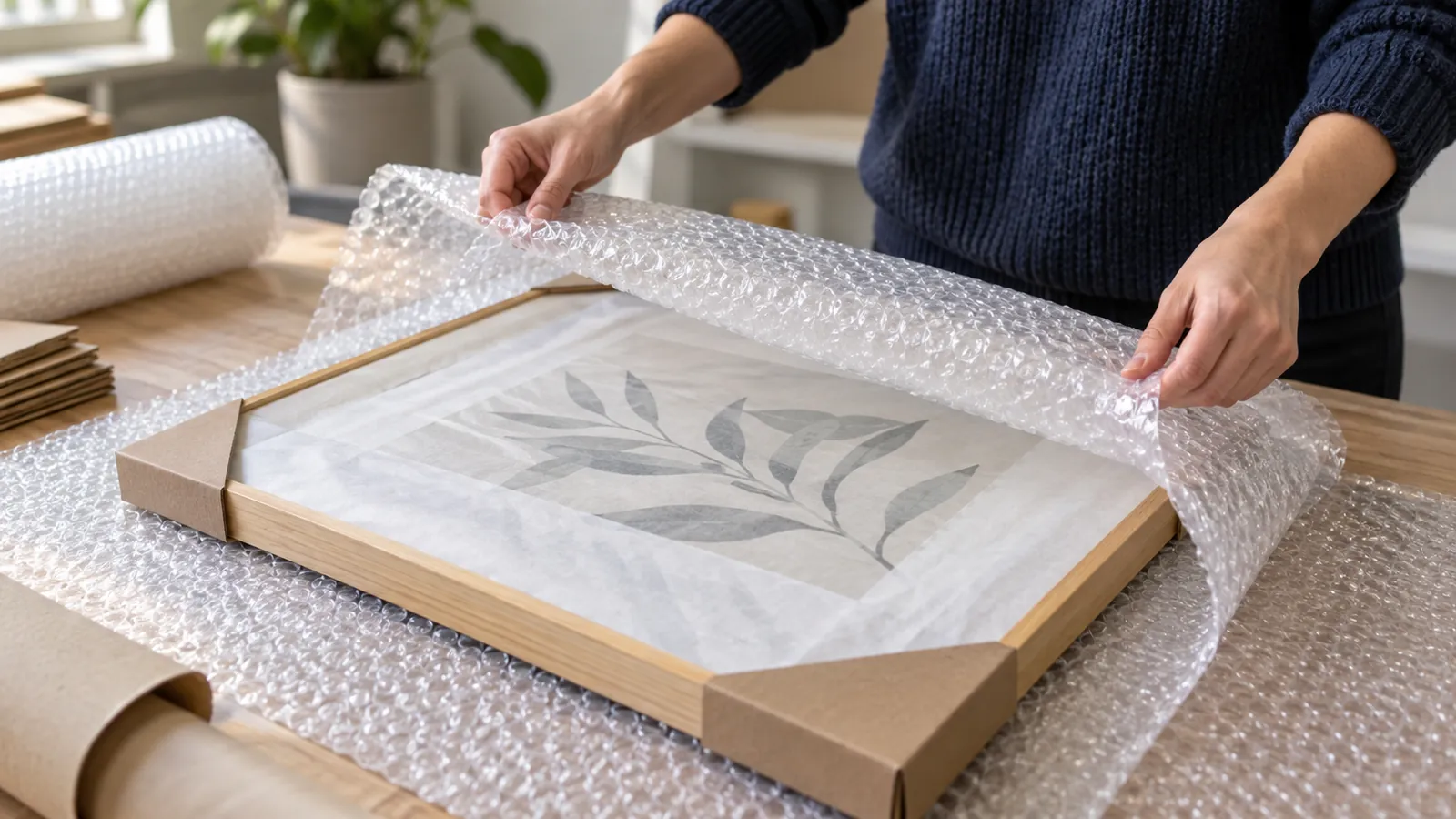
Corners are where most frame damage begins, so pad them before anything else. Cut small squares of bubble wrap, fold each one over a corner like an envelope, and tape it in place without letting tape touch the frame itself. Tape on a painted or gilded frame can lift the finish when it is removed.
If you ship frames often, it is worth preparing a small stack of corner pieces at the start of the day. For heavier frames and mirrors, use double layer bubble wrap for the corner pads so the extra cushioning sits exactly where the impact is most likely to land.
Step-by-step: wrapping a framed piece
Once the corners are padded, work through the rest of the piece in a consistent order:
- Clean and dry the piece. Dust and grit trapped under wrapping can scratch glass and frames as the parcel moves.
- Add a smooth barrier over the face. Lay a clean, smooth sheet of paper over the glass or artwork so the bubble surface does not sit directly on it.
- Pad the corners. Fit the corner pieces described above.
- Wrap the whole piece. Roll the frame in bubble wrap, overlapping the edges, until the front, back and sides are fully covered. Add further layers for larger or more valuable pieces.
- Tape the wrap to itself. Secure the ends of the bubble wrap to other bubble wrap, never to the frame.
- Box it snugly. Choose a carton that fits with a little room for extra padding, and fill any gaps so the piece cannot slide.
For more general technique on layering and taping, see our guide on how to wrap fragile items.
Mirrors and glass-fronted frames
Mirrors and glazed frames need the most care because the glass is both fragile and heavy. A common precaution is to run a few strips of low-tack masking tape across the glass in a cross or grid pattern before wrapping. This will not stop the glass breaking, but if it does crack, the tape helps hold the pieces together and reduces the risk of shards cutting through the wrapping.
Always wrap mirrors with double layer bubble wrap, and consider adding a flat sheet of cardboard over the face before the bubble layers go on. This spreads out any point pressure so a knock is less likely to reach the glass as a single sharp impact. Mark the box clearly as fragile glass and indicate which way it should stand.
Canvases and unframed artwork
Canvas paintings and unframed prints have different risks. There may be no glass to crack, but the surface itself is exposed. Paint that is not fully cured, or a textured finish, can pick up marks if bubble wrap is pressed hard against it for a long time.
- Always place a smooth barrier sheet between the artwork and the bubble wrap.
- Protect the back of a canvas too. A piece of cardboard behind the canvas stops anything poking through the fabric.
- For loose prints and certificates, keep them flat between two stiff boards before wrapping, rather than rolling them in bubble wrap on their own.
- Never pack artwork while it is damp. Wrapping traps moisture, which can mark paper and canvas.
Choosing the right bubble wrap
The right roll depends on the value and fragility of the piece and whether you want the contents to be visible:
| Item | Suggested wrap | Why |
|---|---|---|
| Small prints, light frames, certificates | Transparent single layer | Lightweight cushioning and surface protection; easy to see what is inside |
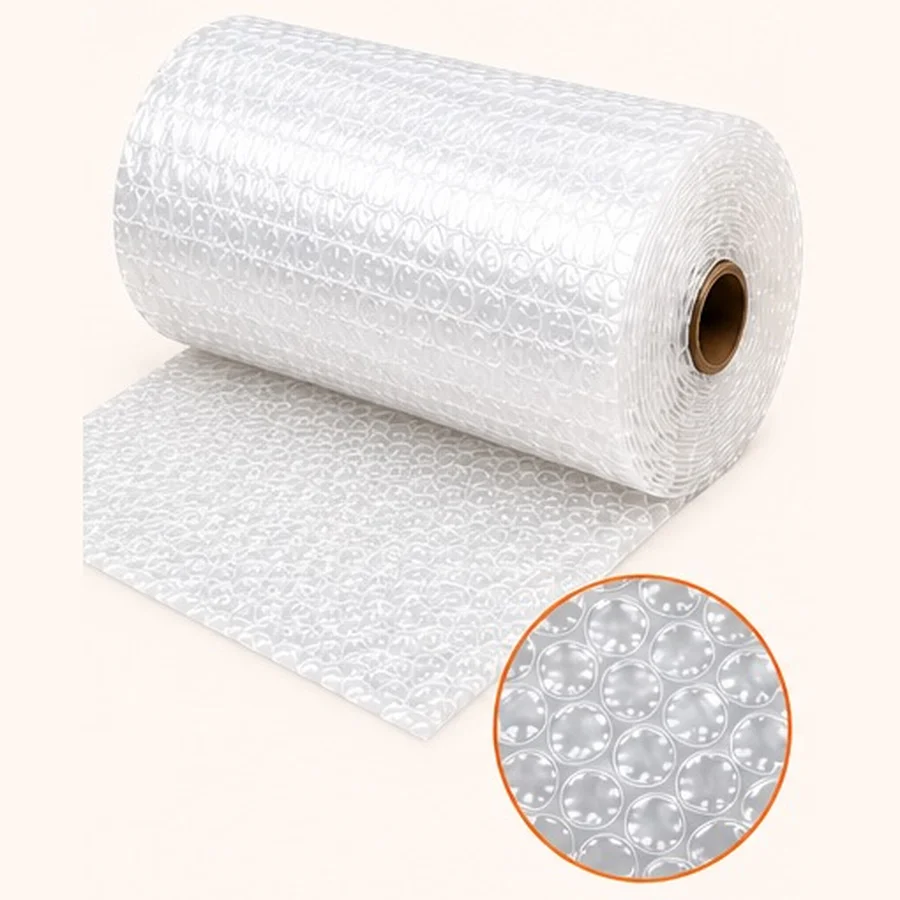
| Mirrors, glass-fronted frames, heavier pieces | Transparent double layer | Extra cushioning and shock absorption for fragile and higher-value items |
| High-value art sent to customers | Black bubble wrap (single or double layer) | Opaque wrap conceals the contents for privacy and security |
Width matters too. Our clear rolls come in several widths up to 1 m, all 100 m long. A wider roll suits large frames and mirrors, while narrower rolls are easier for small frames and corner pads. Our guide to bubble wrap roll sizes explains how to match width to your items, and single vs double layer bubble wrap covers when the extra layer is worth it.
Boxing, labelling and storing framed pieces
Once wrapped, frames travel and store best standing on their edge rather than lying flat under other items. If you are packing several pieces together, wrap each one separately and place a sheet of cardboard between them so frames cannot rub against each other.
Label boxes with the contents and which side is the front, especially if you are using black bubble wrap, since the contents will not be visible. For businesses that store décor or stock for a while, our guide on storing and reusing bubble wrap has tips on keeping rolls in good condition between jobs.
Ready to pack? Browse our Transparent Single Layer Bubble Wrap, Transparent Double Layer Bubble Wrap and Black Bubble Wrap. For larger quantities, request a quote on our bulk order page or WhatsApp us for the latest price.