How Much Bubble Wrap Do I Need? Planning Your Roll Usage
There is no universal figure, but you can measure your own. Use this simple method to estimate bubble wrap per order and plan roll orders.
By Bubble-Wrap.my Team
Key facts
- Bubble wrap usage depends on your items and how your team wraps them.
- Group similar items and test-wrap one from each group.
- Work out usage per order, not just per item.
- Track real usage over a normal week to check your estimate.
- All IAM bubble wrap rolls are 100 m long.
- Clear rolls come in widths from 0.2 m to 1 m.
Running out of bubble wrap in the middle of a busy packing day is frustrating. Ordering far too much ties up cash and storage space. Most businesses sit somewhere in between, reordering when the last roll looks thin rather than working from a plan.
There is no single answer to how much bubble wrap you need, because it depends entirely on what you pack and how you wrap it. What you can do is measure your own usage with a simple method. This guide shows you how to work it out for your business, then turn that into a sensible roll order.
Why a rule of thumb does not work
A phone case and a table lamp use very different amounts of wrap. So do a seller who wraps each item in one quick layer and a seller who double-wraps and pads every corner. Any general figure you find would be wrong for most businesses, which is why it is more useful to measure your own.
The method below takes a little effort in the first week, but it gives you numbers you can trust because they come from your own packing table.
Step one: List and measure what you pack
Start by making a list of the items you pack most often. For most businesses this is a handful of best sellers plus a few awkward shapes. For each one, note its length, width and height, and how fragile it is.
Group similar items together. Items of a similar size and fragility will usually use similar amounts of wrap, so you do not need to measure every single product you sell. Aim for a short list of item groups that covers most of your orders.
Step two: Test-wrap a sample of each item group
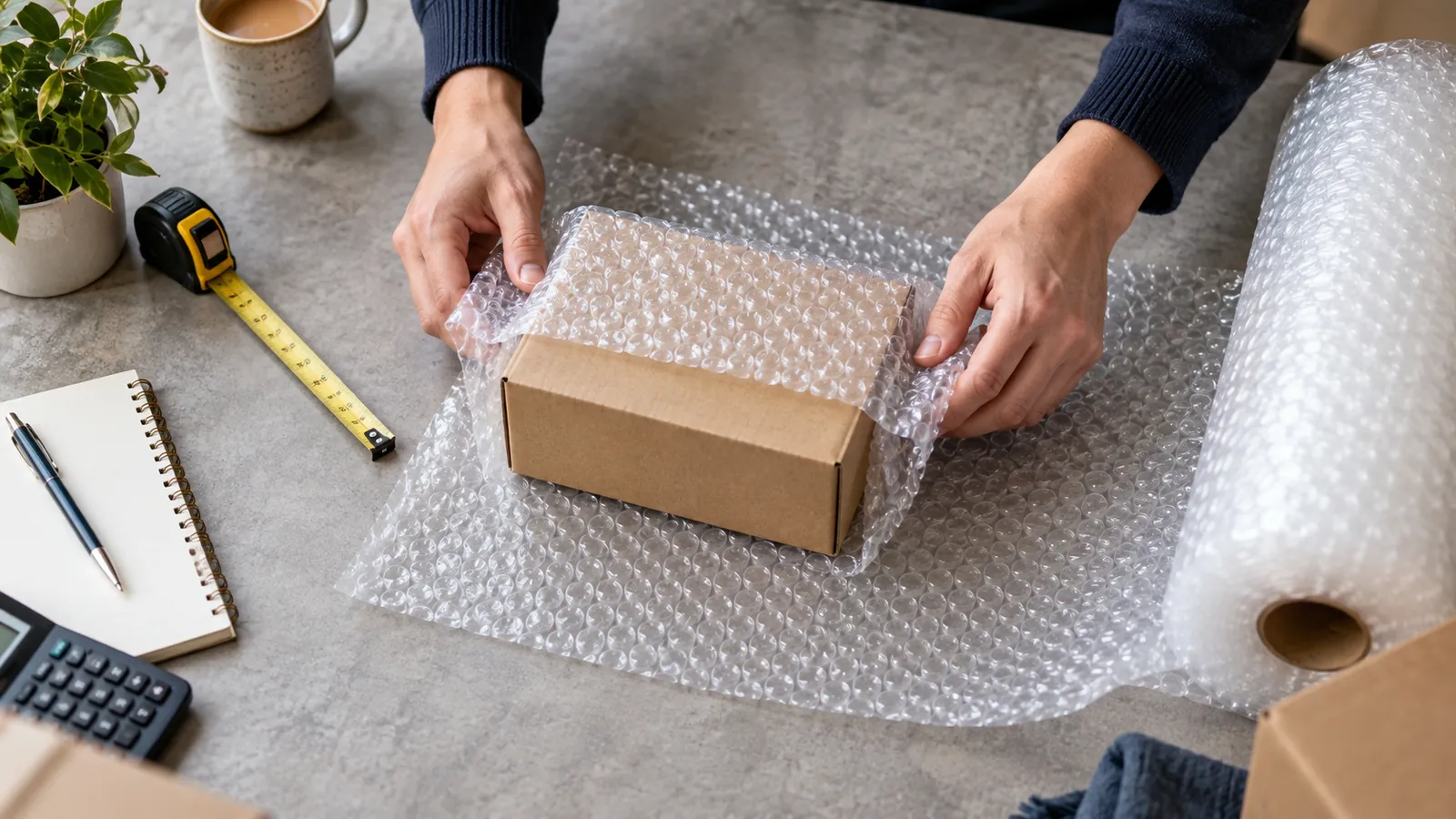
Take one item from each group and wrap it exactly the way you would for a real order, including corner padding and extra layers. Then unwrap it and measure the length of bubble wrap you used, or measure the piece before you start and note how much you cut off.
- Use the same roll width you would normally use for that item.
- Wrap it the way your team actually works, not the way you wish they did.
- Note whether it needs single layer or double layer wrap.
- Record any void fill you use in the box separately, so you know what is wrapping and what is filling space.
If several people pack orders, ask each of them to test-wrap the same item. You may find large differences, which is a useful training point on its own.
Step three: Count usage per order
Many orders contain more than one item, so the next step is to work out usage per order rather than per item. Use your recent order history to see which item groups usually appear together, then add up the wrap each combination needs.
A simple sheet with columns for item group, wrap length per item, roll width and wrap type is enough. Multiply by the number of items in a typical order and you have a working estimate of wrap per order.
Step four: Track real usage for a week
Estimates are a starting point. To check them, track actual usage over a normal week:
- Note which rolls are open at the start of the week and roughly how much is left on each.
- Count every roll you start during the week.
- Record how many orders you packed each day.
- At the end of the week, compare the wrap used with your estimate.
If real usage is much higher than your estimate, look for the cause: offcuts being thrown away, a wider roll than needed, or items being wrapped more than necessary. If it is lower, your team may be under-wrapping fragile items, which is worth checking against any damage reports.
Repeat the tracking during a busy period such as a sales campaign or festive season, since your order mix and volume can change.
Choosing roll widths to reduce waste
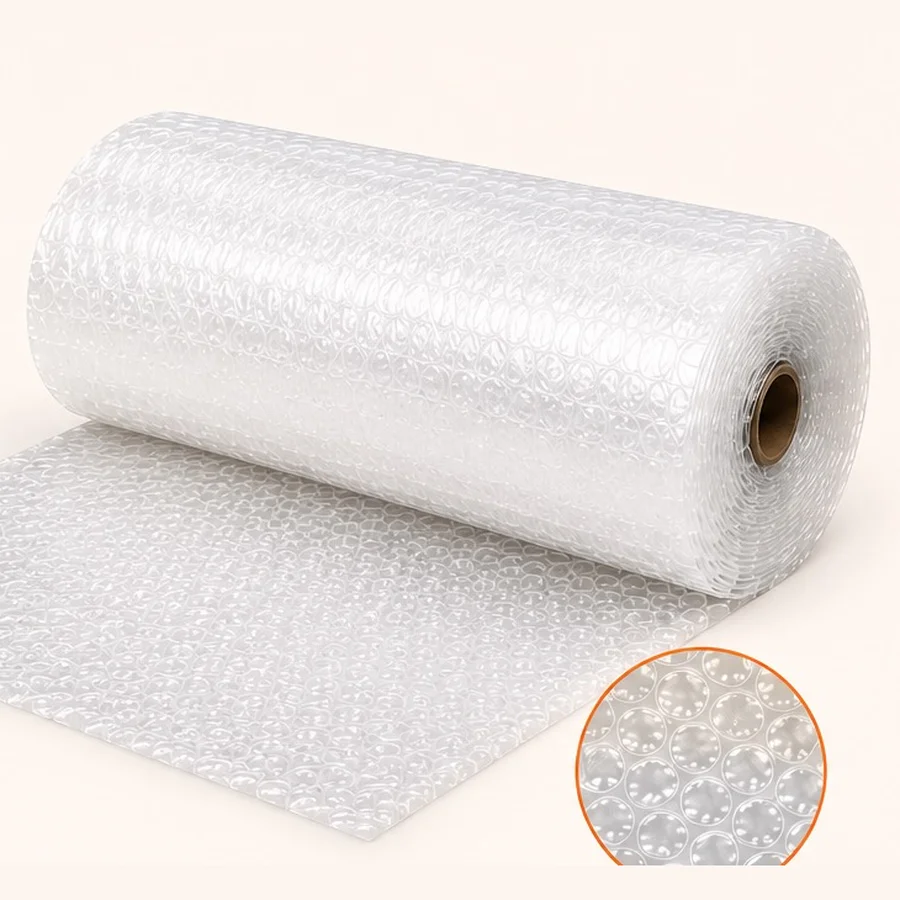
Width has a big effect on how much you use. A roll that is much wider than your items leads to large offcuts. All our rolls are 100 m long, and the clear rolls come in a range of widths:
| Width | Available in | Typical fit |
|---|---|---|
| 0.2 m | Single layer | Small items and corner pads |
| 0.25 m | Single and double layer | Small to medium items |
| 0.33 m | Single and double layer | Medium items and general e-commerce |
| 0.5 m | Single and double layer | Larger items and mixed product ranges |
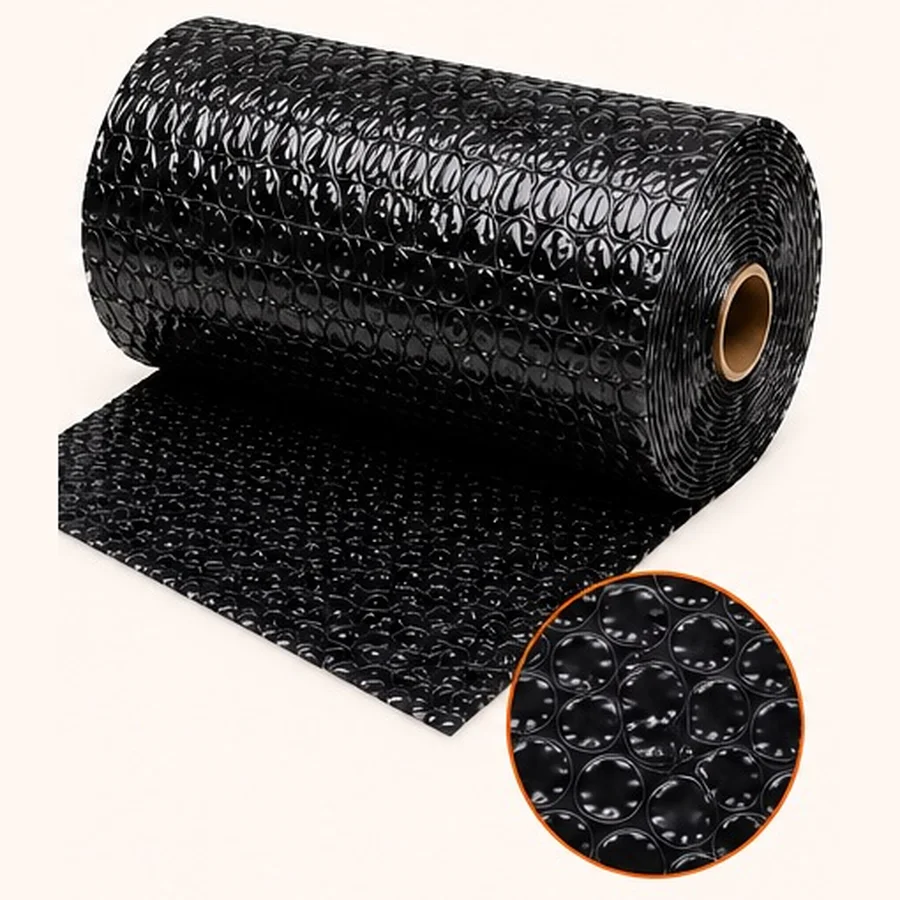
| 1 m | Single, double and black | Large, bulky items, cutting to size |
Many businesses keep one narrow and one wide roll on the packing table, so staff can pick the width that suits each item. Our guide to bubble wrap roll sizes covers this in more detail.
Turning your numbers into an order
Once you know your average wrap per order and how many orders you pack, you can estimate how long a roll lasts. Divide the 100 m roll length by your average wrap per order to get the approximate number of orders per roll, then compare that with your weekly order volume.
From there, decide how many weeks of stock you want to hold. Consider your storage space, how quickly your orders change and how much buffer you want before a busy period. Review your numbers every so often, especially when you add new products. Tips on avoiding waste are in our guides on common packing mistakes and bubble wrap for e-commerce.
When you have your figures, browse our Transparent Single Layer, Transparent Double Layer and Black Bubble Wrap rolls, then send your quantities by width through our bulk order page or WhatsApp us for the latest price.