Packing Electronics and Gadgets with Bubble Wrap
How to prepare, wrap and box phones, laptops, cameras and accessories so they reach customers without cracked screens or bent ports.
By Bubble-Wrap.my Team
Key facts
- Switch devices off fully and remove discs, cards and loose parts before packing.
- Give the screen its own padding before wrapping the whole device.
- Double layer wrap is designed for fragile and higher-value products.
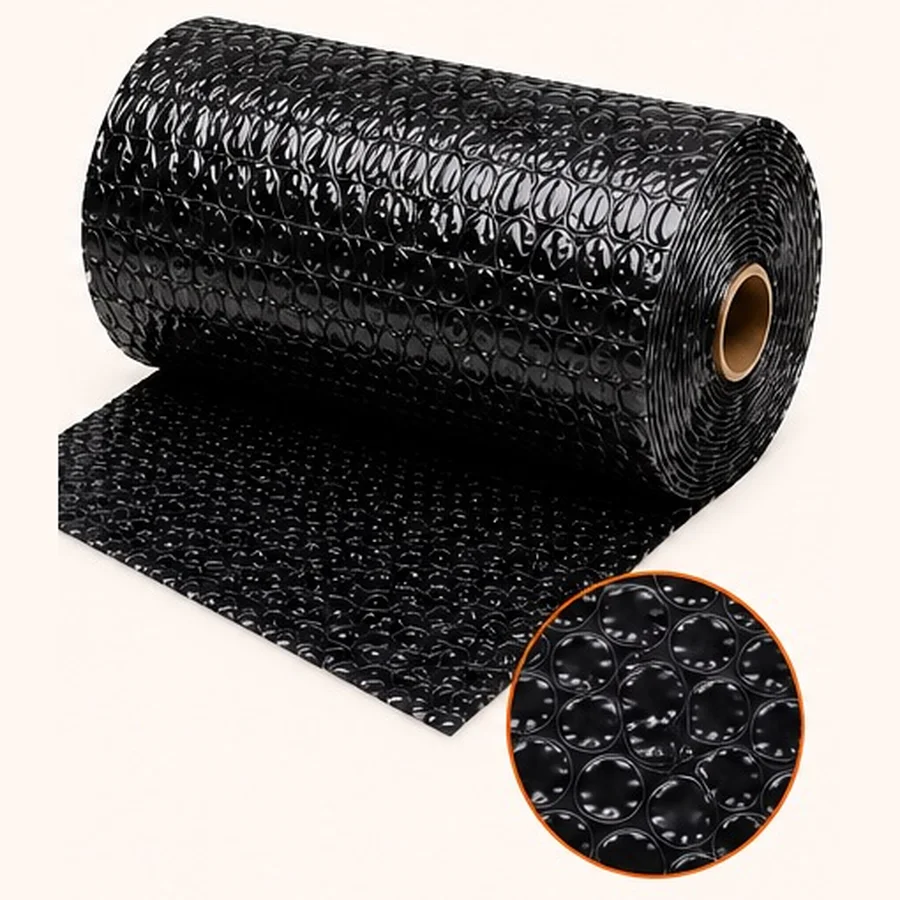
- Black bubble wrap conceals contents, useful for phones and other high-value items.
- Bare circuit boards and drives usually go in an anti-static bag before bubble wrap.
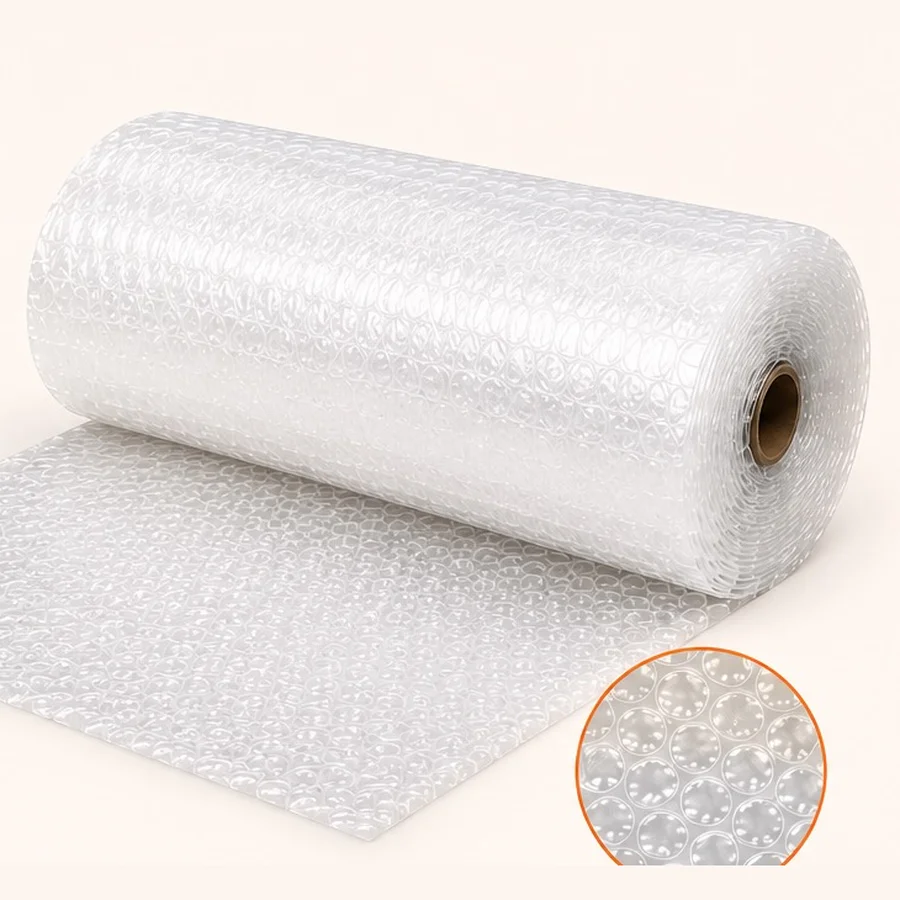
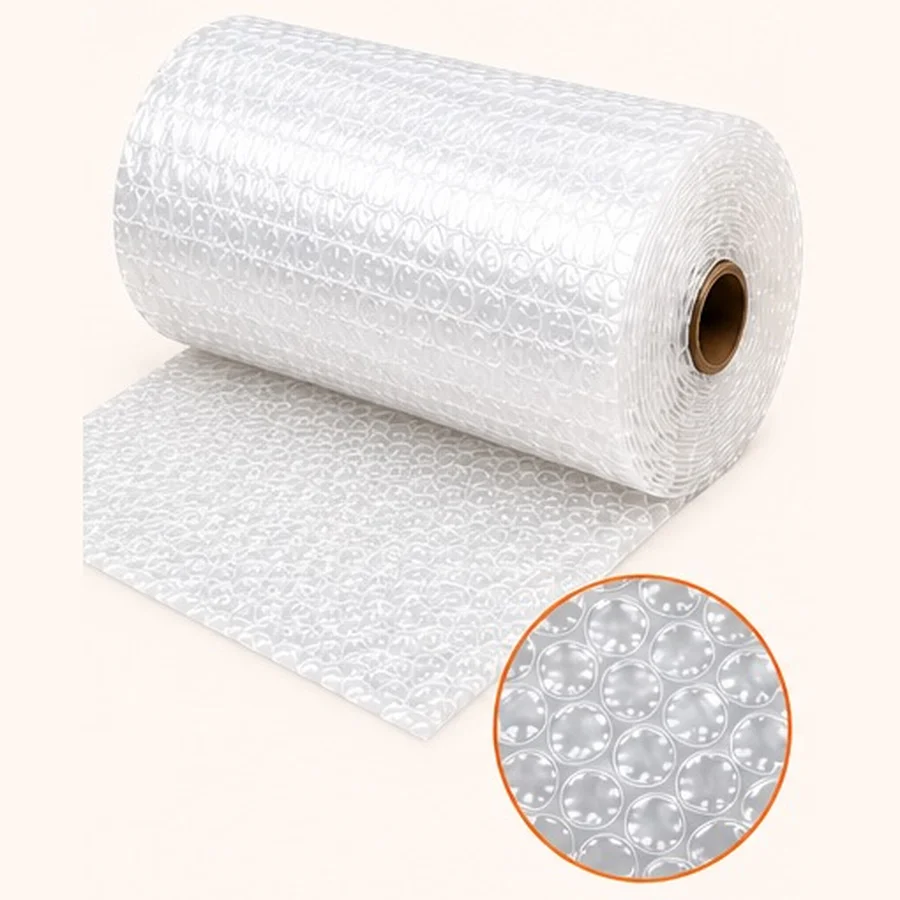
- IAM rolls come in widths from 0.2 m to 1 m, all 100 m long.
Electronics are some of the most common items sent by Malaysian online sellers, and some of the most expensive to replace when they arrive damaged. A cracked screen or a bent port usually means a refund, a return and an unhappy customer.
Bubble wrap is well suited to gadgets because it cushions impact without adding much weight. This guide covers how to prepare a device, which roll to pick, and how to wrap screens, ports and accessories so they survive the journey.
Prepare the device before wrapping
Good packing starts with the device itself. Loose parts and forgotten accessories are a common cause of damage inside the box.
- Switch it off fully. Do not ship devices in sleep or standby mode.
- Remove removable items. Take out discs, memory cards and anything sitting in a tray or slot, and pack them separately.
- Disconnect and coil cables. Coil each cable loosely, secure it with a tie, and label it if the device has several.
- Protect the screen surface. If the original screen film or a soft cloth is available, put it on before the bubble wrap.
- Take photos. For sellers, a quick photo of the item and its condition before packing is useful if there is ever a dispute.
Choosing bubble wrap for electronics
The right roll depends on the value of the item, its size and whether you want the contents hidden. All our rolls are 100 m long, so the choice is about width and layer type.
| Item | Suggested roll | Why |
|---|---|---|
| Cables, chargers, earphones, small accessories | Single layer, 0.2 m or 0.25 m | Light cushioning and scratch protection |
| Phones, tablets, cameras, handheld consoles | Double layer, 0.25 m or 0.33 m | Extra shock absorption for higher-value items |
| Laptops, monitors, speakers | Double layer, 0.5 m or 1 m | Covers larger items in fewer passes |
| Items you want to keep private | Black bubble wrap, single or double layer | Opaque wrap conceals what is inside |
Our catalogue describes double layer wrap as designed for fragile and higher-value products, which covers most gadgets. Single layer is our lowest-cost option and works well for accessories and as an extra outer layer. For a fuller comparison, read single vs double layer bubble wrap.
How to wrap a device step by step
This method works for most phones, tablets, laptops and small appliances.
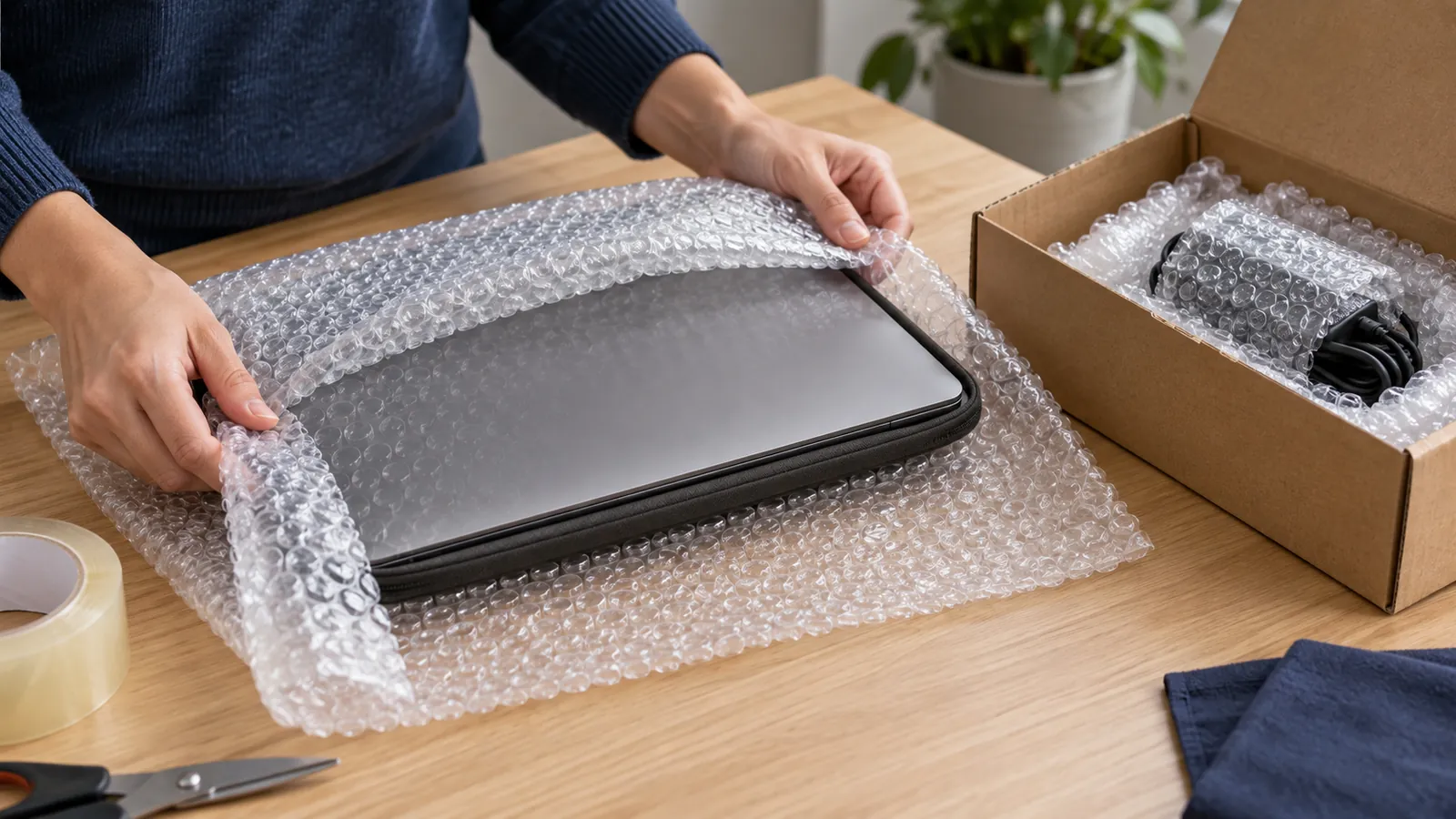
- Cover the screen first. Place a folded piece of bubble wrap over the screen or display side so it has its own padding before the full wrap goes on.
- Wrap the whole device. Roll the wrap around it so every side is covered, with generous overlap at the edges and corners.
- Add a second layer for valuable items. Wrap again in the opposite direction so no side relies on a single thin section.
- Tape wrap to wrap. Keep tape off the device itself, where it can leave residue on casings and screens.
- Wrap accessories separately. Chargers, cables and remotes each get their own wrap so they cannot knock against the main item.
Screens, ports and protruding parts
Screens are the most fragile part of most electronics. Pressure on a small area, such as a corner of another item pushing into it, can crack glass even without a hard drop. That is why the screen should always have its own padding and why nothing hard should sit directly against it in the box.
Ports, buttons, antennas and lenses can snap or bend if they take a knock. Give protruding parts an extra small wrap, and pack the device so these parts face the centre of the box rather than an outer wall. Camera lenses should have their caps on before wrapping.
Boxing and filling the space
Bubble wrap works best inside a sturdy carton that is slightly larger than the wrapped item. The aim is for the device to sit in the middle of the box, cushioned on every side, with no room to move.
- Line the bottom of the box with a layer of wrap before placing the item.
- Fill gaps around the sides with more wrap or other void fill so the item does not shift when shaken.
- Add a layer on top before closing the box, then tape all seams.
- If the original retail box is used, treat it as the inner item and pack it inside a shipping carton with wrap around it.
Avoid oversized boxes with lots of empty space, which let the item slide and hit the walls. For more on common errors, see bubble wrap packing mistakes.
Moisture, static and sensitive components
Bubble wrap is a plastic film, so it helps keep dust and light splashes away from a device during transit. In humid conditions, make sure items are dry before they are wrapped and avoid leaving them sealed in a hot place for long periods.
Our catalogue does not describe these rolls as anti-static, so treat them as standard cushioning. Bare circuit boards, hard drives and loose components are usually placed in a suitable anti-static bag first, with bubble wrap added around that for impact protection. Finished devices in their casings are generally wrapped directly.
Tips for e-commerce sellers
If you ship gadgets every day, consistency matters as much as the wrap itself. Keep narrow rolls for accessories and a wider double layer roll for main products at the same packing table, so staff wrap every order the same way.
Black bubble wrap is popular for phones and other high-value items because it hides the product from view in transit. Our guides to clear vs black bubble wrap and bubble wrap for e-commerce cover this in more detail. For small, light accessories, padded envelopes and bubble mailers from our wider range can also be an option.
For electronics, we recommend transparent double layer bubble wrap for main devices, single layer bubble wrap for accessories, and black bubble wrap for private or high-value shipments. For regular supply, request a quote via our bulk order page or WhatsApp us for the latest price.